Top Conversion Rate Optimization (CRO) Tips for High-Converting Product Pages
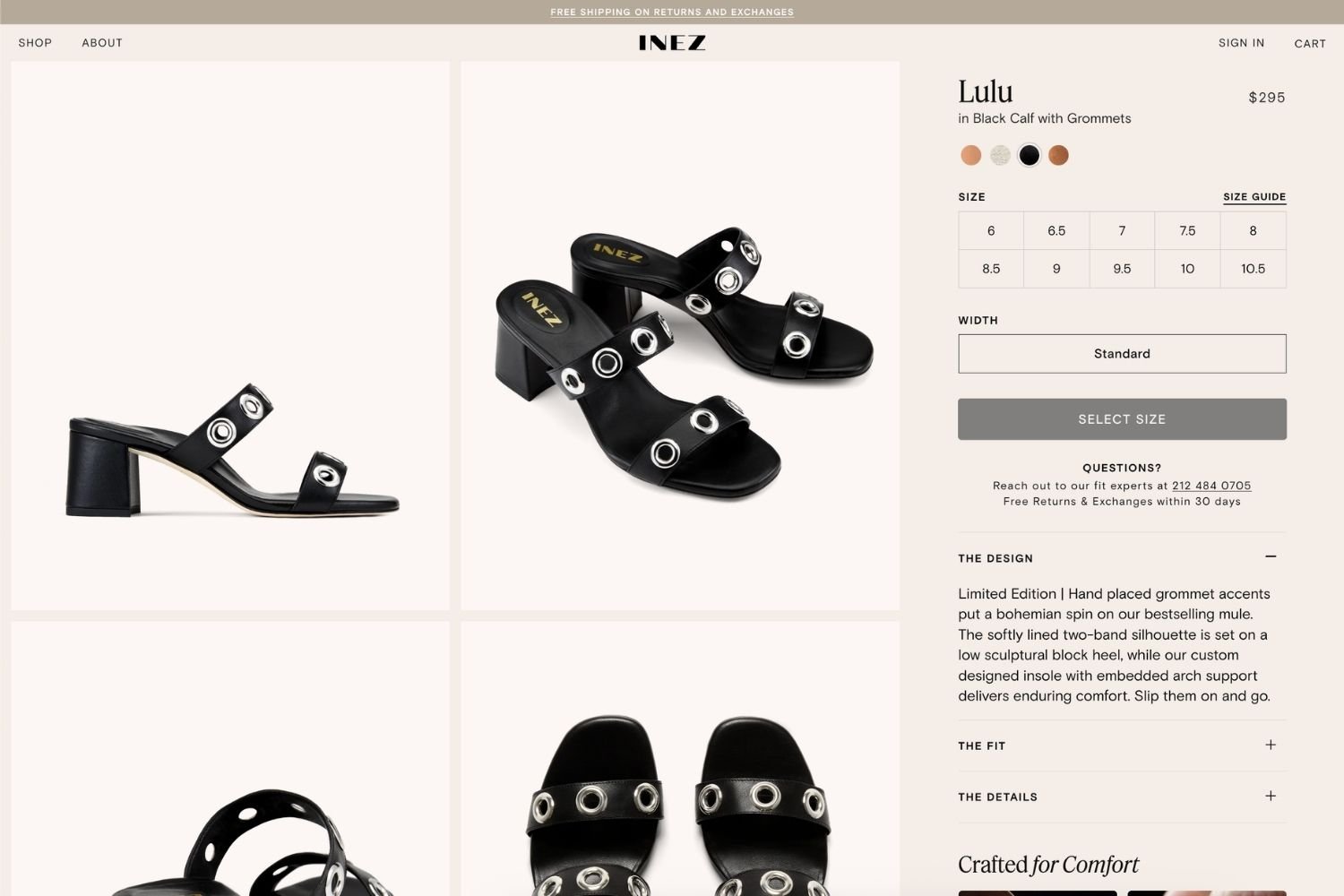
Product page for the footwear brand Inez.
A product page does a lot more than show a product and a price.
For Shopify brands, it is often the moment of truth, the page where shoppers decide whether to buy, keep browsing, or disappear. You can invest heavily in ads, email, creators, and social content, but if the product page feels flat, confusing, or incomplete, conversion leaks show up fast.
The strongest product pages do not just inform. They help shoppers feel confident enough to act, and make the product feel clear, credible, and easy to buy.
The Most Important Page You’re Overlooking
A lot of brands focus on getting more traffic, then overlook the page doing the hardest work.
That is usually where conversion rate stalls. Not because the product is weak, but because the page does not help shoppers move from interest to purchase. Sometimes the issue is clutter: too much copy, too many modules, and no clear visual hierarchy. Other times it is the opposite: barely any context, thin descriptions, and not enough trust signals to answer the obvious questions.
Either way, hesitation wins.
High-converting product pages reduce that hesitation. They make the value of the product easy to understand, bring the right details forward at the right moment, and create a smoother path to checkout, especially on mobile, where so much e-commerce browsing actually happens.
Why High-Performing Product Pages Matter for Conversion Rates
The best product pages are usually not the busiest ones. They are the clearest.
They combine strong visuals, concise messaging, social proof, and easy-to-find supporting information in a way that feels natural to browse. Shoppers should not have to dig for sizing, shipping, returns, or reviews. They should not have to guess what the product looks like in real life. And they definitely should not have to work hard to imagine whether it fits their style or needs.
That is where conversion-focused merchandising makes a real difference. Product pages that convert well tend to do a few things consistently:
They show the product clearly with strong images and context.
They explain the product in a way that is benefit-led, not overloaded.
They build trust with reviews, customer content, and visual proof.
They create natural upsell opportunities without distracting from the main purchase.
They work smoothly on mobile, where every extra second and every awkward layout choice costs attention.
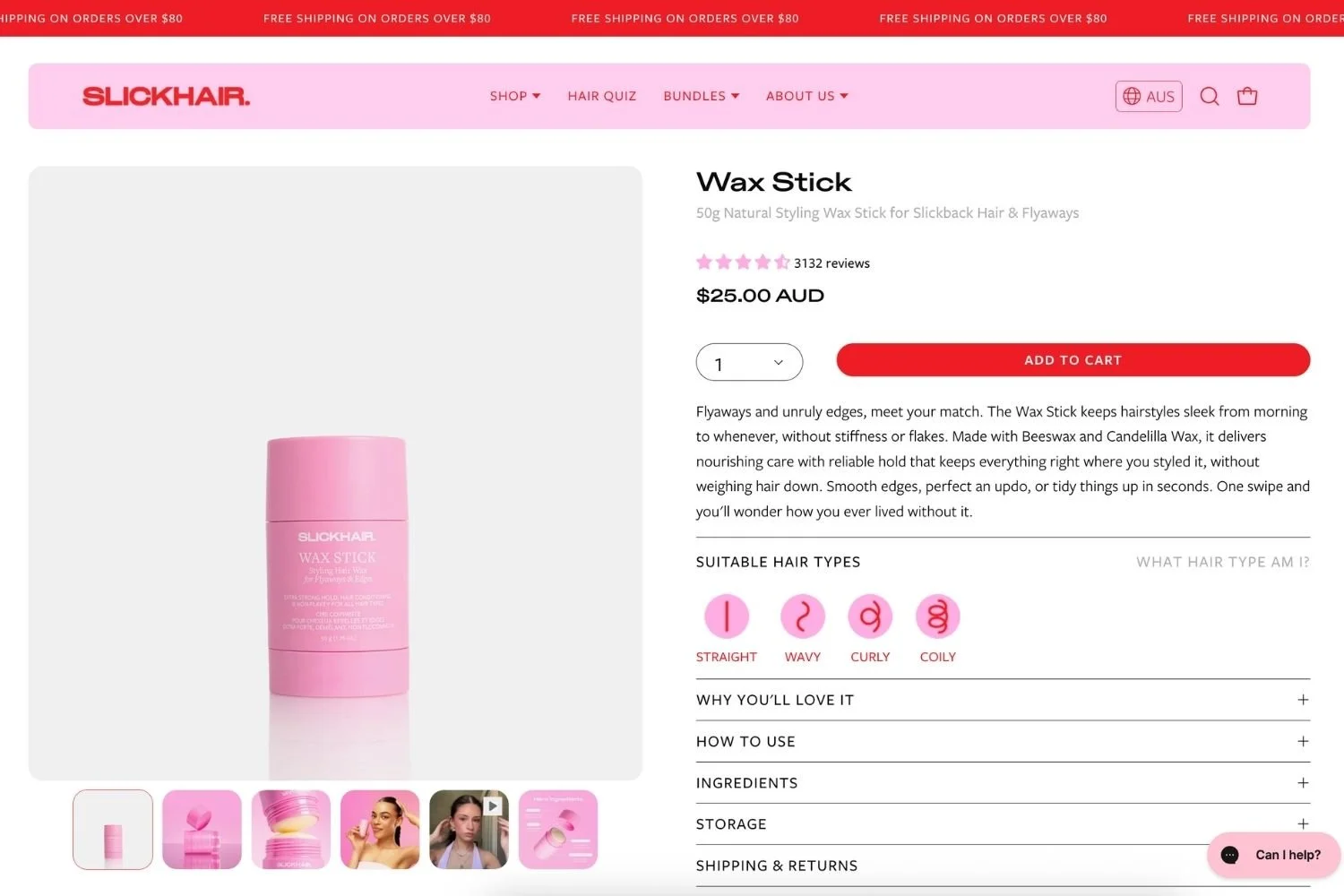
Product page for haircare brand Slickhair: clearly communicates value, reinforces it with benefits and social proof, and reduces friction with simple guidance.
5 CRO Tips for Better Shopify Product Pages
If you want more out of your product pages, start here.
1. Lead with visuals that reduce hesitation
Shoppers want to see what they are buying, but more importantly, they want to picture it in real life.
Clean studio shots matter, but they are rarely enough on their own. Product pages convert better when visuals help answer the unspoken questions: What does it look like worn, styled, held, or used? How does it fit into real life? Does it feel premium, practical, giftable, or worth the price?
The more clearly a shopper can picture the product, the easier it is to move forward.
2. Make the page easy to scan
A strong product page does not dump everything on the shopper at once.
It guides attention. The product title, price, key value points, and primary call to action should feel immediate. Supporting details like materials, shipping, returns, and FAQs should be easy to access without turning the page into a wall of text.
Good CRO is often about reducing friction, not adding more persuasion. Clear structure beats crowded pages almost every time.
3. Use social proof where it actually helps
Reviews are valuable, but high-converting product pages usually go one step further.
They show the product through real people, real styling, and real content. That kind of social proof works especially well because it helps shoppers move past polished brand imagery and see how the product lives outside the studio.
This is where shoppable Instagram feeds can be especially effective. Instead of keeping your best Instagram content separate from the buying journey, you can bring it directly onto the storefront. Real-time social content, UGC, and lifestyle posts help shoppers feel inspired while reinforcing trust.
For brands already investing in Instagram, this creates a much stronger connection between discovery and conversion.
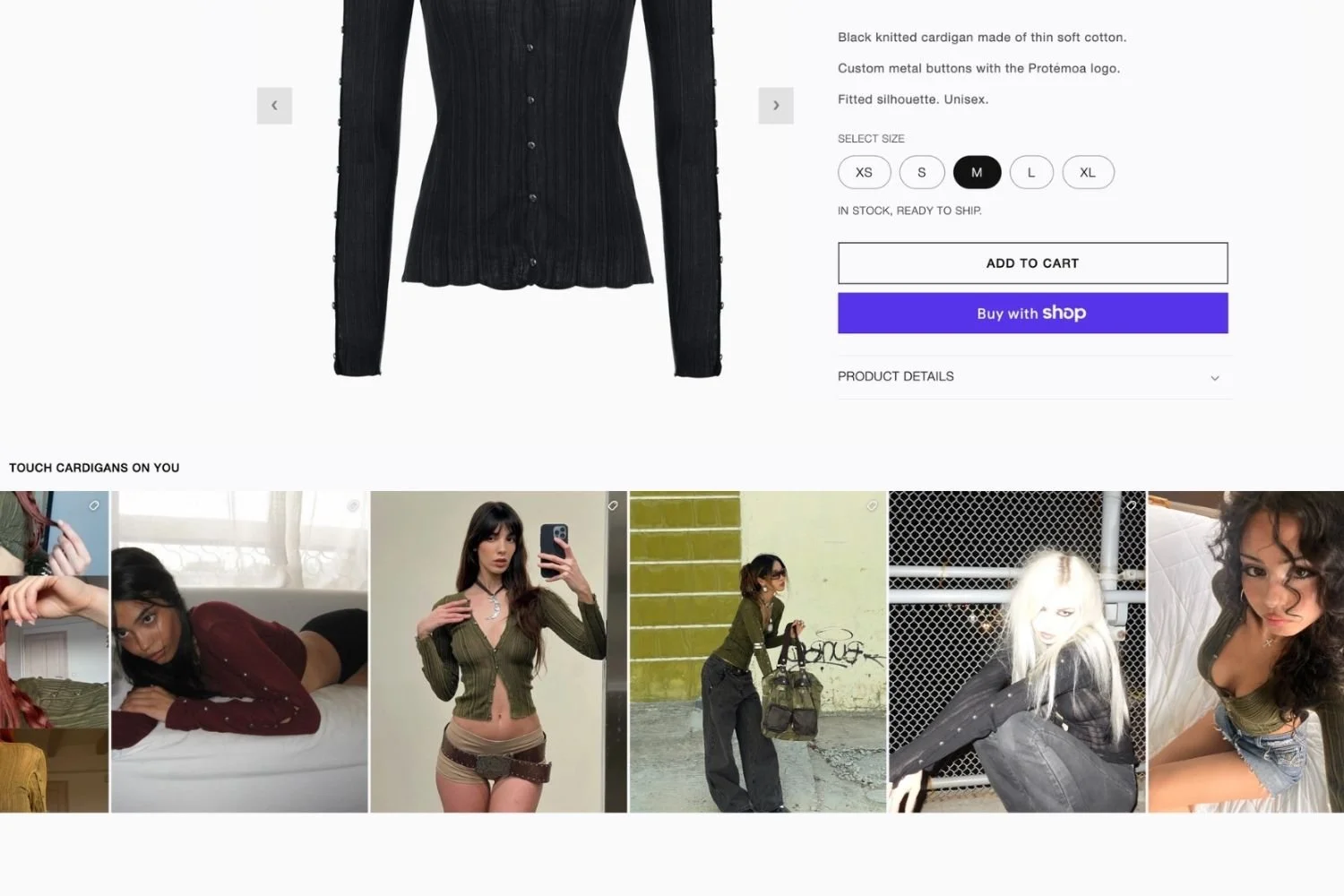
Product page for clothing brand Protemoa, featuring a UGC Instagram feed to inspire trust through social proof.
4. Keep the path to purchase short
The longer the shopper has to think about what to do next, the easier it is to lose them.
That is why the best product pages remove unnecessary steps. Strong CTAs, clear variant selection, relevant upsells, and intuitive layout all help keep momentum high. The goal is not to make the page aggressive. It is to make buying feel simple.
This is also where shoppable content can pull extra weight. When social content is connected to products directly, inspiration is not just decorative, it becomes part of the purchase path.
5. Build for mobile first, not mobile later
A product page can look great on desktop and still quietly underperform where it matters most.
On mobile, weak hierarchy, oversized blocks of text, slow media, and cluttered layouts show up fast. High-converting Shopify product pages are designed to stay focused on smaller screens. They load quickly, keep key information within reach, and make it easy to browse visuals, trust signals, and purchase options without friction.
Mobile CRO is rarely about doing more. It is about staying sharp.
4 Shopify Apps That Can Strengthen Product Page CRO
A better product page is usually not about adding more apps. It is about using the right ones in the right places. Here are four Shopify apps that support the parts of a product page that matter most for conversion.
Our own app Mintt - Instafeed helps brands bring Instagram posts and UGC directly into the shopping experience through shoppable feeds. That matters because Instagram often drives the first spark of interest, but that inspiration usually disappears once shoppers land on a static product page.
Mintt - Instafeed keeps that momentum going with fresh, real-time content, authentic social proof, and a direct path from discovery to product exploration. For visual brands, it is a smart way to make product pages feel more trustworthy, more engaging, and more conversion-ready. Try it for free.
Judge.me strengthens one of the most important trust layers on any product page: reviews. Star ratings, written reviews, and photo or video submissions help reduce uncertainty and give shoppers more confidence before buying.
Our newest app Mintt - Free Gift can support conversion and AOV at the same time. A well-placed gift-with-purchase offer gives shoppers an extra reason to complete the purchase while making the offer feel more valuable. Use it for free.
GemPages gives merchants more flexibility over page structure and design. That is useful for brands that want tighter control over hierarchy, merchandising, and testing without relying entirely on developer resources.
Shopify brands do not create high-converting product pages by accident
They combine clarity, trust, strong visuals, and a smoother path to purchase. They answer key questions without overwhelming the shopper. They make the product feel real. And they keep inspiration close to the point of conversion.
That is what better product page CRO comes down to less friction, more confidence, a clearer path from interest to conversion, and a constant testing perspective.
Updated by Mintt Studio Team on 17/03/2026
More from Mintt Studio