Build Trust, Then Upsell: The Product Page Playbook for Shopify Stores
Your product detail page (PDP) is where purchase decisions get made. Shoppers land there with intent, evaluate what they see in seconds, and either add to cart or leave. Everything on the page, from photos to reviews to recommendations, either moves them forward or creates friction.
Most Shopify stores treat the product page as a display case. The stores that convert well treat it as a sales system. This guide covers both layers of that system: building trust through social proof, and converting that trust into higher order values through smart upsell and recommendation strategies.
What Happens on a Product Detail Page
A shopper landing on your PDP is answering one question: “Can I trust this product enough to buy it?” Before they consider buying more, they need to believe the core product delivers what it promises.
The Shopify product page has to do three things at once. It has to reduce doubt, confirm fit, and make the next step obvious. When any of those elements is missing, shoppers hesitate. When all three are present, they buy and often spend more than they planned.
Trust comes before revenue. Brands that push upsells before earning confidence see higher cart abandonment. The sequence matters.
The Trust Layer: Social Proof on Shopify Product Pages
Social proof is any signal that other people have bought, used, and valued the product. It transfers credibility from past customers to new ones. On a Shopify product page, social proof is the primary mechanism for reducing purchase hesitation.
There are two main types of social proof that perform on PDPs: structured reviews with ratings, and visual content showing the product in real life.
Star Ratings and Written Reviews
A product without reviews is a product a shopper cannot verify. Star ratings give an instant quality signal. Written reviews answer the questions your product description does not, including fit, durability, actual color, and how the product compares to expectations.
Judge.me is one of the most widely used review apps on the Shopify App Store. It collects reviews automatically through post-purchase email requests, supports photo and video submissions, and displays ratings as rich snippets in search results. Those structured data snippets surface your star ratings directly in Google, which means social proof starts converting traffic before shoppers even land on your site.
Judge.me also integrates with checkout and email flows, so the review collection process runs without manual effort. The result is a steady accumulation of verified reviews that build credibility over time.
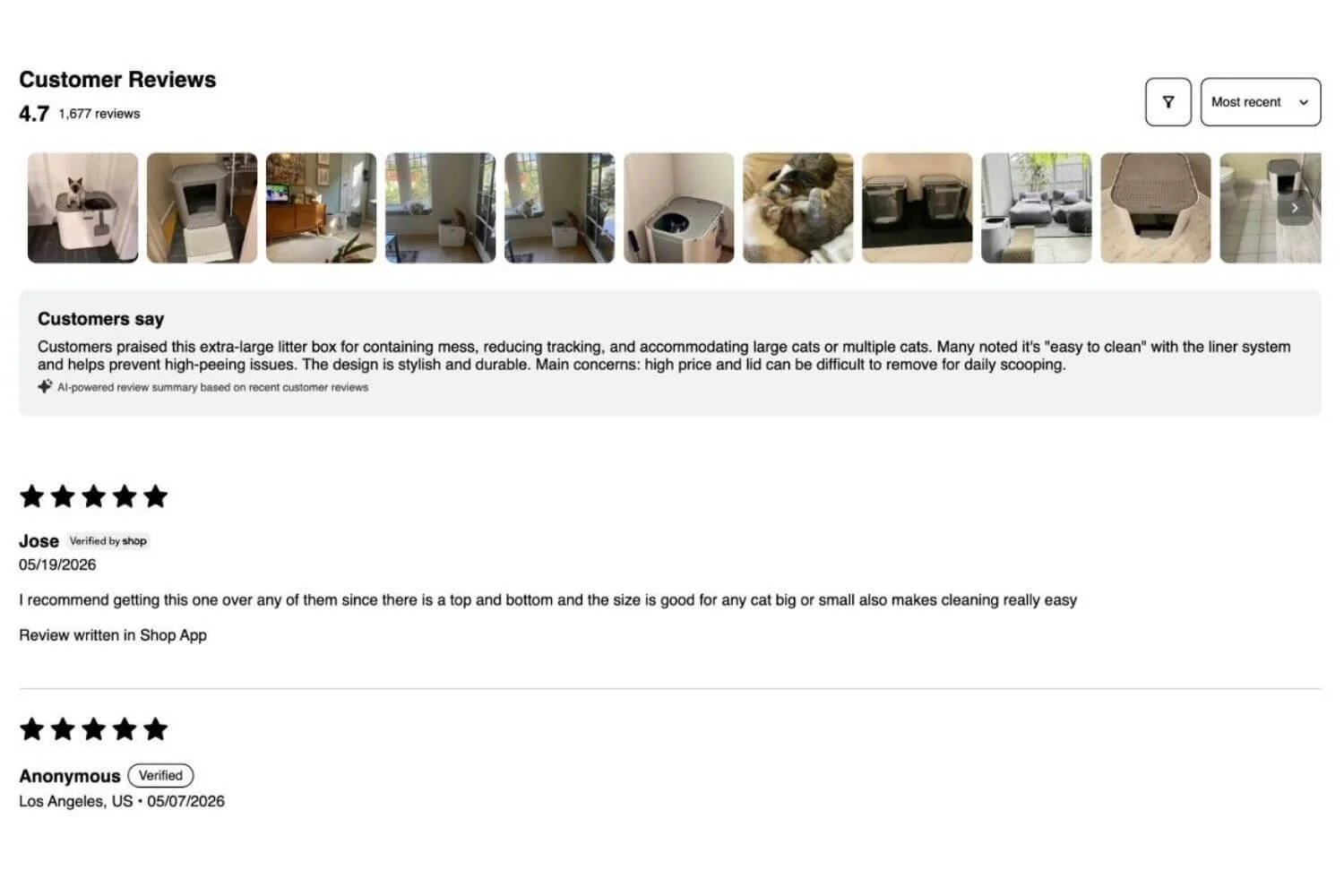
Modkat product page featuring user reviews.
Visual Social Proof: Instagram and UGC on the PDP
Written reviews tell shoppers the product works. Visual content from customers and creators shows it in context. Seeing the product on a person who resembles the shopper, in a setting that matches their life, resolves the last mile of purchase hesitation.
Our app, Mintt Instafeed lets you display your Instagram content, including customer posts and influencer content, directly on your Shopify storefront.
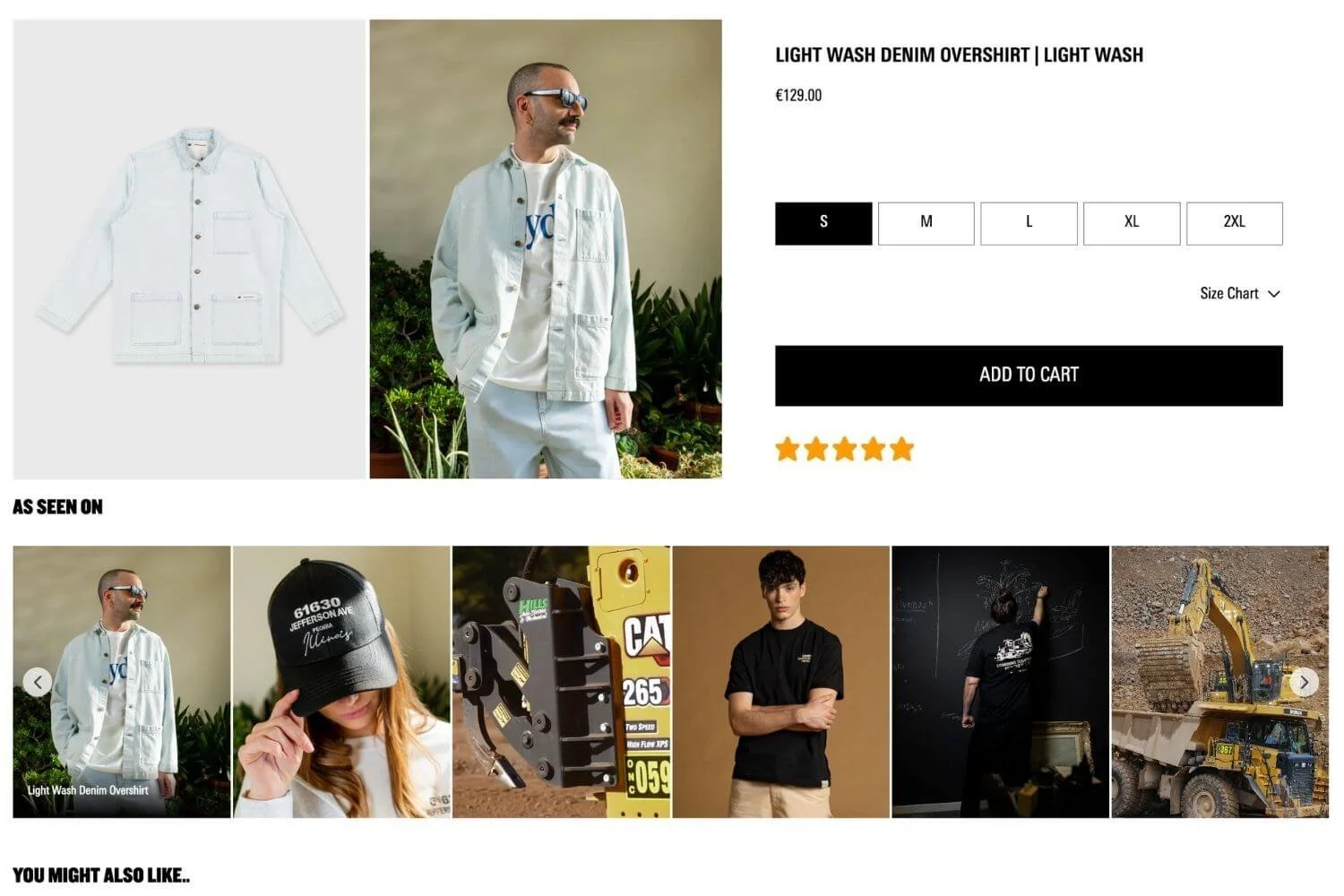
What makes Mintt Instafeed particularly effective on the product detail page is flexible placement. You can surface a curated feed specific to a product or collection directly below the add-to-cart section. A shopper wavering over a jacket can scroll down and see how it looks on ten different people. That is social proof at the point of highest purchase intent.
See how Osume uses Mintt Instafeed to turn visitors into shoppers.
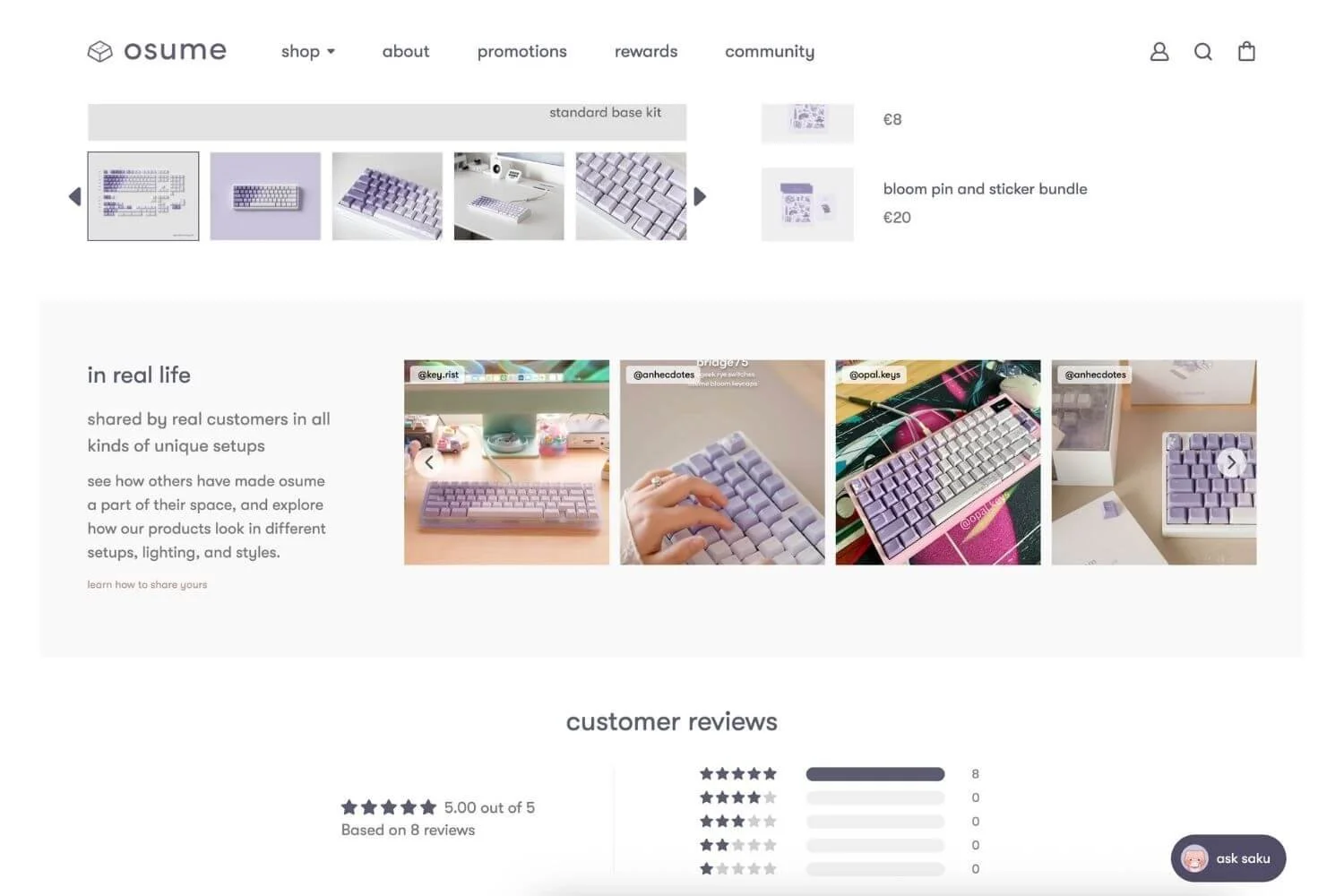
Osume product page featuring Mintt Instafeed below the add-to-cart section.
How Trust and Visual Proof Work Together
Reviews and Instagram content address different shopper objections. Reviews handle the “does this work as described” question. Visual content handles the “does this look right for me” question. Neither fully replaces the other.
A product page with a strong review score and a curated Instagram feed showing customers using the product covers both dimensions. Judge.me anchors credibility with verified ratings and written detail. Mintt Instafeed provides the visual, emotional confirmation that the product belongs in the shopper’s life.
Mintt Instafeed and Judge.me are now integrated together to show ratings and review counts on Mintt Instafeed popup.
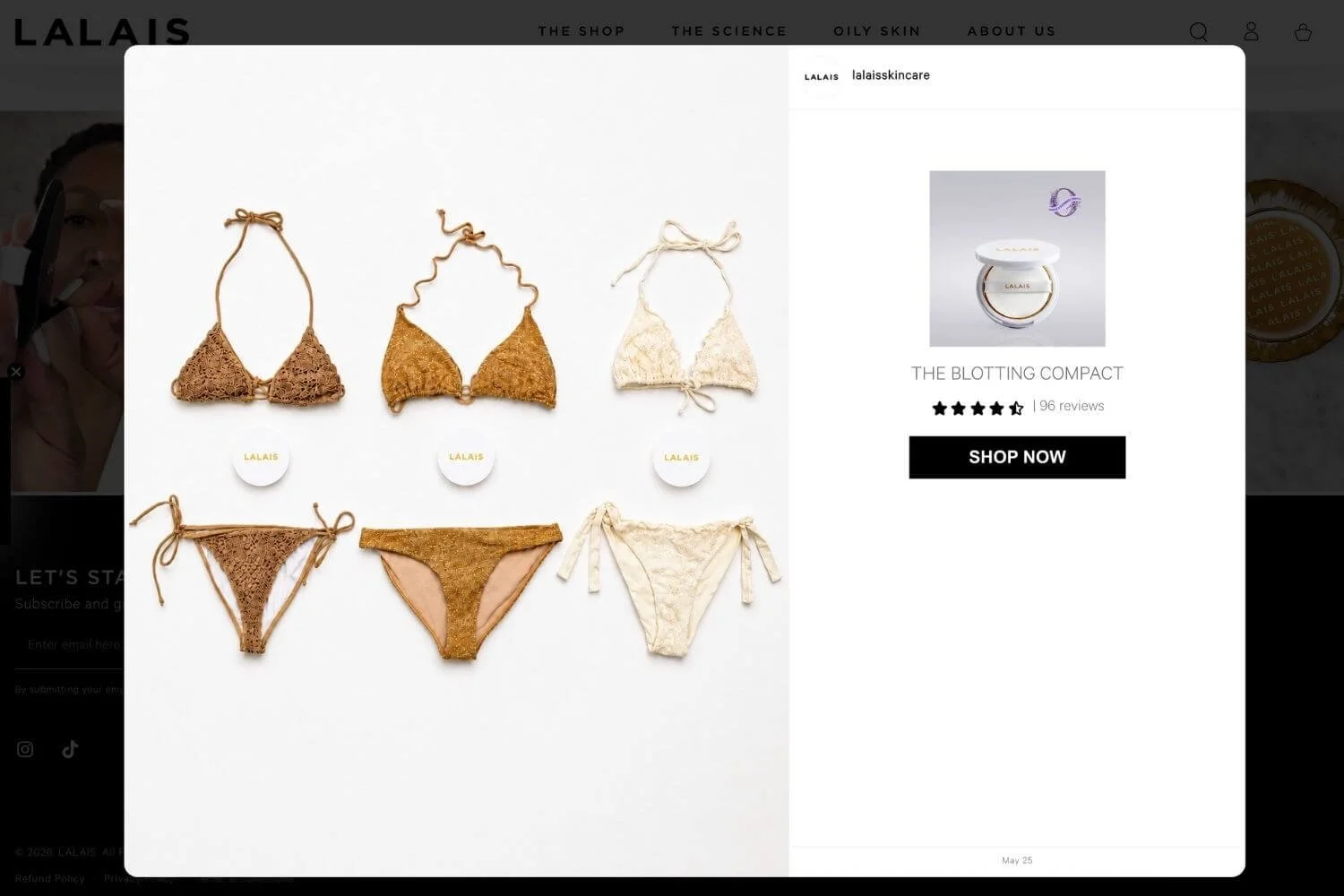
Lalais Skincare shoppable Instagram post with reviews.
Converting Shoppers with Upsell Strategies on the Product Page
Once trust is established, the page has room to grow order value. A shopper who believes in the product is already in a buying mindset. The question becomes what else fits with what they are already buying.
There are three proven upsell approaches that work at the PDP level: product recommendations, frequently bought together bundles, and personalized suggestions based on browsing or purchase behavior.
Product Recommendations on the PDP
A product recommendation on the PDP surfaces related items while the shopper is still engaged. These recommendations work best when they are contextually relevant, not just algorithmically driven. “You might also like” performs worse than “Pairs well with” or “Often bought with this.”
Placement matters. Recommendations placed below the main product block after the reviews see higher engagement than those placed above the fold. Shoppers who scroll that far are signaling genuine interest. They are more likely to add a second item.
Frequently Bought Together
Frequently bought together is one of the most effective upsell formats in e-commerce. It mirrors what Amazon normalized: showing a bundle of items commonly purchased as a set, with a single click to add all to cart.
On a Shopify PDP, a frequently bought together block gives the merchant control over which combinations appear. For a skincare brand, this might be a cleanser paired with its matching toner. For an electronics store, it could be a device paired with accessories. The block frames the additional items as a natural extension of the purchase rather than an add-on, which reduces the psychological resistance to spending more.
Personalized Product Recommendations
Personalized product recommendations take relevance further by tailoring suggestions to the individual shopper’s behavior. A shopper who has viewed multiple items from the same collection sees different suggestions than a first-time visitor. A returning customer who previously bought a specific category gets recommendations that build on that history.
Personalization increases the likelihood that a recommendation connects. Generic suggestions get ignored. Relevant ones get clicked.
Offering Gifts with Purchase or BOGO
Free gift offers operate differently than traditional upsells. Instead of asking the shopper to spend more, they offer a reward for reaching a spend threshold. The shopper’s motivation shifts from evaluating an add-on to protecting a benefit they are close to earning.
Mintt - Free Gift by Mintt Studio handles this on Shopify stores. You can configure gift triggers based on cart value, specific products, or tiered rewards. A free gift bar showing progress toward the threshold creates visible momentum that the shopper sees exactly how much more they need to add to claim their reward.
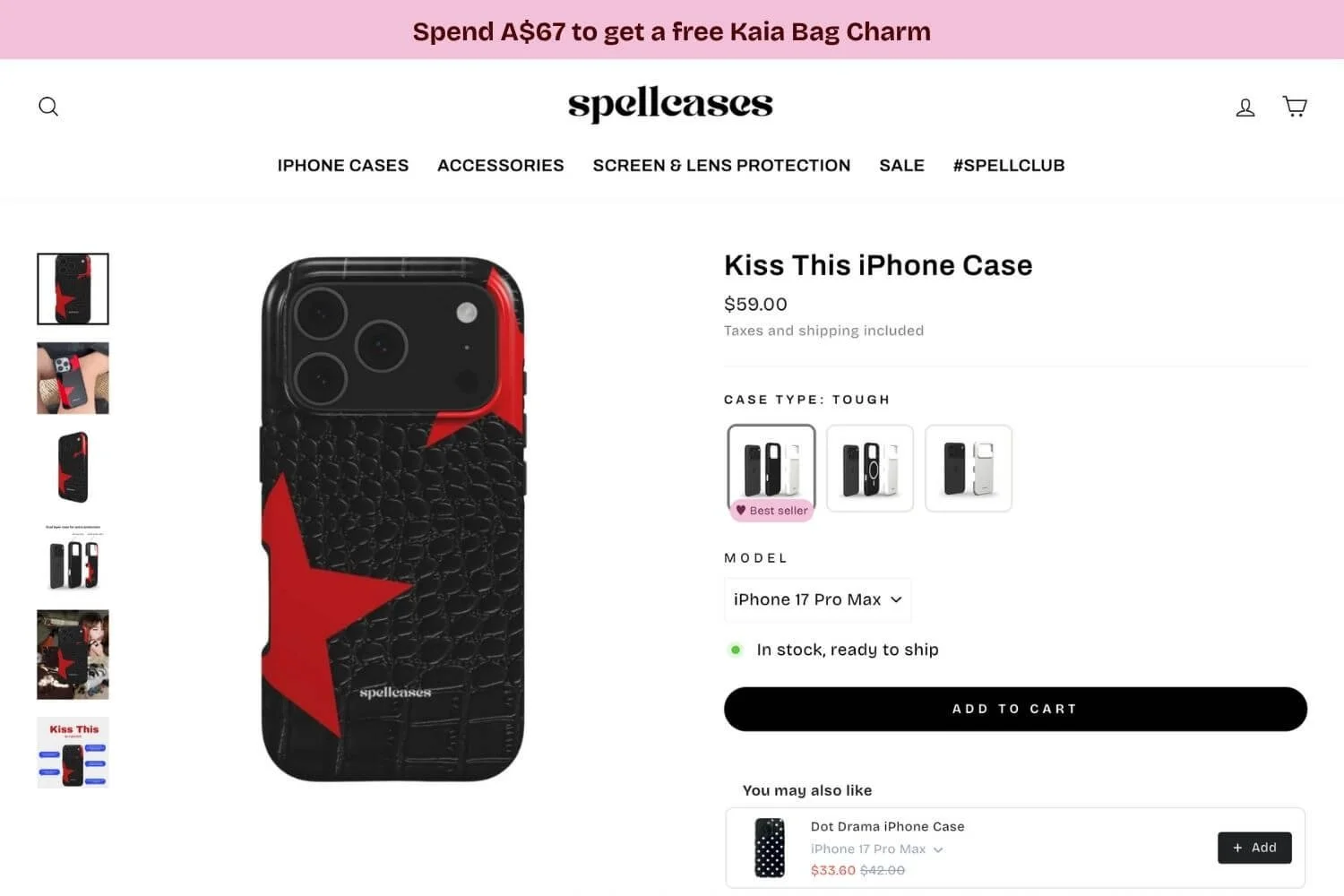
Free gift bar powered by Mintt - Free Gift, showcased on Spell Cases.
This format works in two directions. For converting shoppers who are close to buying but hesitating, a free gift at a low threshold lowers the barrier to the first purchase. For shoppers who are already buying, a higher-value threshold drives incremental cart growth as they add another item to unlock the gift.
Free gift offers also reduce the transactional feel of upsells. The shopper perceives they are getting something rather than being sold something. This distinction matters for brand perception, particularly in categories like beauty, fashion, and lifestyle where the relationship between merchant and customer carries weight.
Post-Purchase Upsell: Capturing Value After Checkout
The product page is not the only place to increase order value. Post-purchase upsell, presented after the shopper has completed checkout, is one of the highest-converting moments in the entire customer journey. The objection has already been overcome. The payment details are already entered. Adding a second item requires a single click.
Essentials Upsell handles the post-purchase layer. It presents targeted upsell offers on the thank-you page or in post-checkout flows, where shoppers are in a confirmed buying state. Because the initial friction of purchase has been removed, acceptance rates for post-purchase offers tend to run higher than on-page recommendations.
Post-purchase upsell and PDP upsell serve different moments. The PDP recommendation catches the shopper while they are deciding. The post-purchase offer catches them after the decision is already made. Using both creates coverage across the full purchase arc.
How to Make your Product Page Work with Shopify Apps
Each of the apps covered in this guide solves a specific problem on the product page. Where they become more powerful is in combination.
Here is how the stack works in sequence on a well-optimized Shopify PDP:
Mintt Instafeed places real customer and influencer content on the product page. A shopper arrives and sees the product used in real life. Purchase hesitation drops.
Judge.me displays verified star ratings and written reviews. The shopper can read specific feedback about fit, quality, and delivery. Confidence in the product increases.
With trust established, product recommendations and frequently bought together blocks surface relevant additions. The shopper considers pairing items and adds a second or third product to cart.
Across the session, Mintt - Free Gift shows a progress bar toward a gift threshold. Shoppers who are close to qualifying add one more item to unlock the offer.
At checkout, Essentials Upsell presents a targeted post-purchase offer. The shopper, in a confirmed buying state, adds a high-margin item with a single click.
Each layer builds on the one before it. Trust enables recommendation acceptance. Recommendation acceptance increases cart value. Post-purchase upsell captures value after the initial commitment. Free gift mechanics create a second conversion driver that feels like a reward rather than a pitch.
What to Prioritize First When Optimizing Product Pages
If your product page currently has no social proof, that is the first thing to fix. A PDP without reviews or visual content cannot support the upsell layer. Shoppers who are not yet convinced will not add recommended items, and they will not respond to post-purchase offers.
Start with Mintt Instafeed. Your social content already lives in Instagram, and it’s an easy uplift to add social proof to your product pages. Then add Judge.me, and activate automated post-purchase review requests.
Once reviews are accumulating and visual content is on the page, add the upsell layer. Configure frequently bought together bundles for your top products. Set up a free gift threshold that reflects your average order value goal. Activate post-purchase upsell offers for your highest-margin items.
The sequence does not need to be complex. Trust first, then revenue. The product detail page is where both happen.
To sum up, the stores that win on product pages are not the ones with the best products. They are the ones that guide shoppers through trust to conversion, and through conversion to higher order value, without friction at any step.
Updated by Mintt Studio Team on May 29, 2026

We are a small team building big things as a Shopify Partner. Offering reliable solutions for merchants, our apps reach 900 million customers every month.