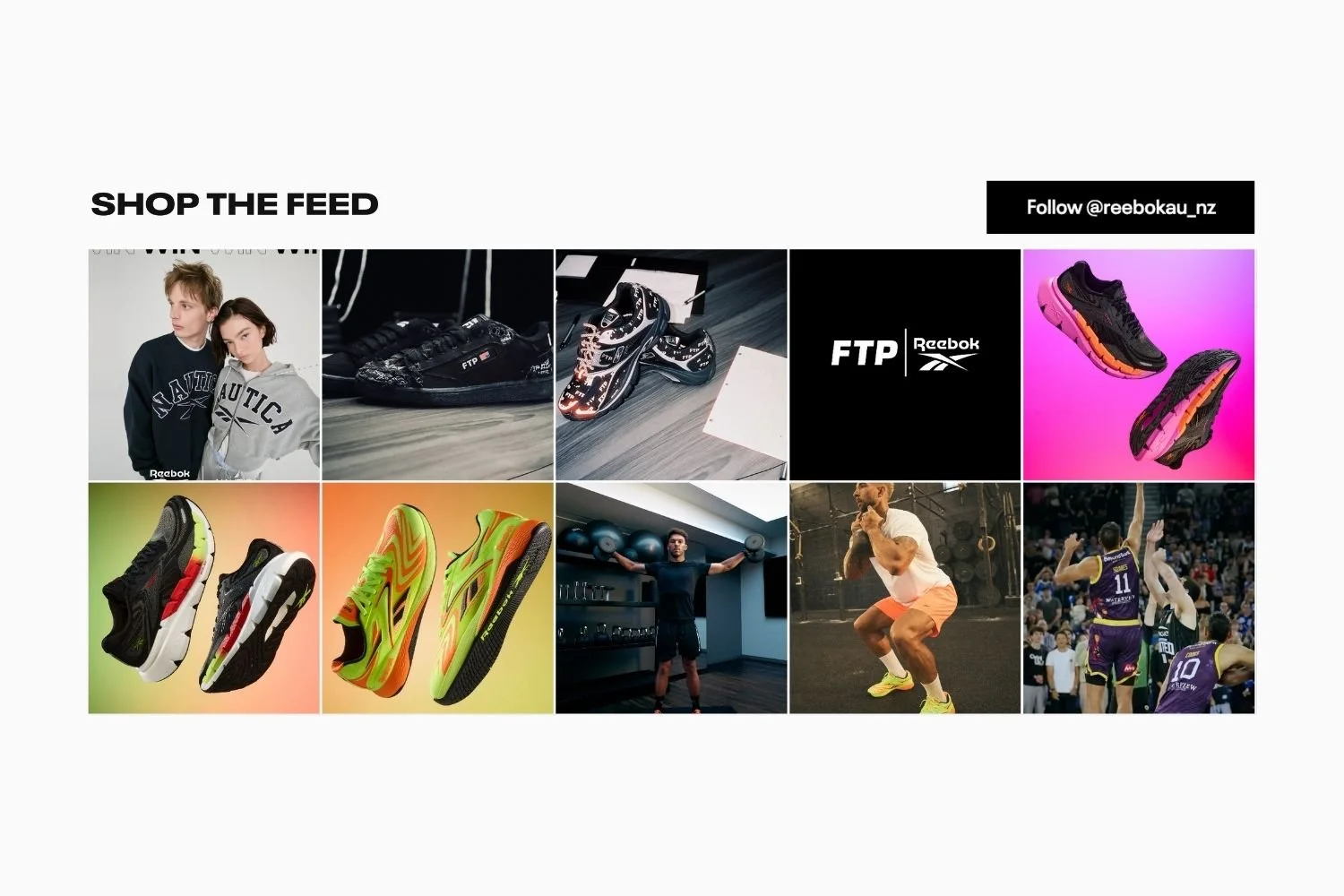
Social Commerce for Shopify: How Shoppable Instagram Feeds and UGC Drive Real Sales

Social commerce has changed how people shop. Customers no longer start their buying journey on Google, browse to a product page, and convert in a straight line. They discover products in their Instagram feed, watch someone use them in a Reel or shoppable video, see a friend tag a brand in a post — and only then do they think about buying. The path from "I want that" to "I bought that" now runs straight through social media.
For Shopify brands, that shift creates both a challenge and a real opportunity. The challenge: your storefront alone can't replicate the social energy that made someone want your product in the first place. The opportunity: you can bring that energy onto your store with a shoppable Instagram feed — and let it do the selling for you.
Social Commerce Isn't Just for TikTok
When people talk about social commerce in 2026, TikTok Shop tends to dominate the conversation. And for good reason — the numbers are hard to ignore. But chasing viral moments on TikTok isn't the only way to sell socially. Instagram has quietly become one of the most powerful social commerce tools available to Shopify brands, especially when you extend it beyond the Instagram app itself.
The key is shoppable feeds. By embedding your Instagram content directly on your Shopify store — and tagging your products within those posts — you turn your storefront into a social shopping experience. Shoppers see real content, real people, real context. And they can go from inspiration to checkout without ever leaving your site.
That's social commerce working on your terms, on your own real estate, with your own customers.
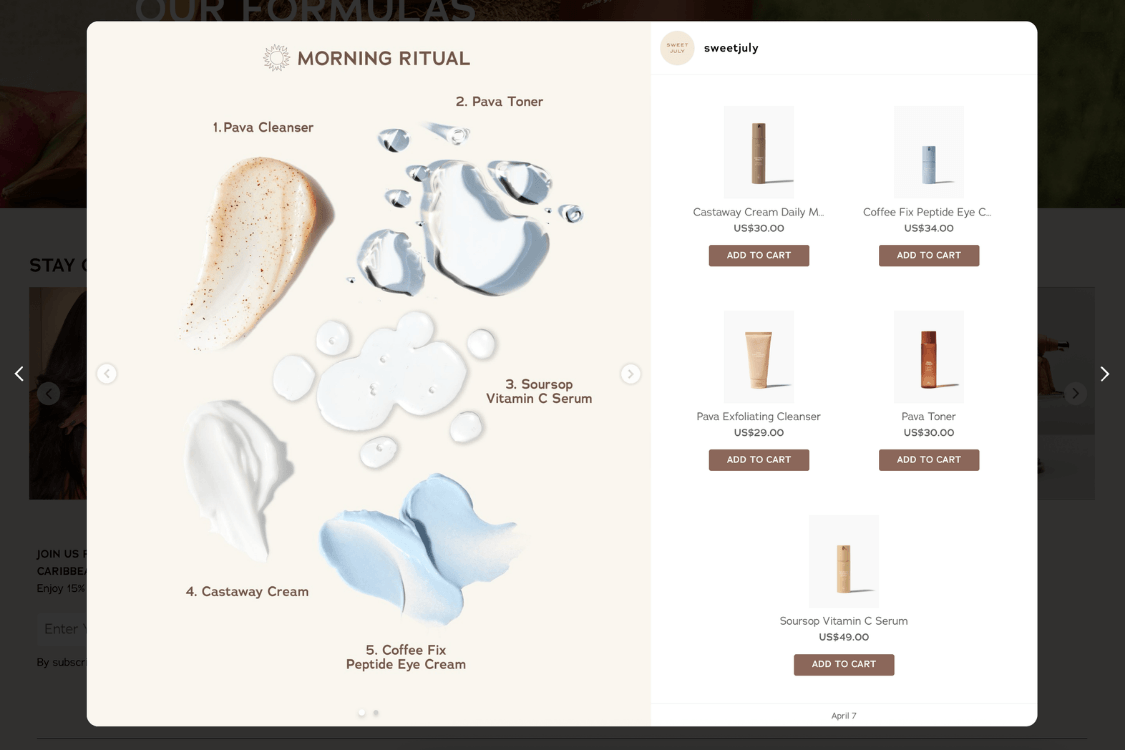
Shoppable post by brand Sweet July, with multiple products tagged.
The Role UGC Plays in Social Selling
Not all Instagram content is equal when it comes to converting. Your own brand posts — polished, on-message, visually consistent — have their place. But user-generated content (UGC), the tagged photos and Reels your actual customers post, carries a different kind of weight.
UGC works because it's not trying to sell anything. A customer posting a try-on video or sharing how they styled your product isn't writing ad copy. They're just showing their life. And that unscripted honesty is exactly what makes it so persuasive to other shoppers who are on the fence.
The social commerce principle at work here is simple: people trust people. A potential customer scrolling your product page is looking for evidence that someone like them bought this and was happy. A tagged post from a real customer delivers that evidence in a way no product description ever could.
Most Shopify brands already have a library of this content sitting on Instagram — posts where customers have tagged them, shared unboxings, shown off their purchases. The question is whether that content is being used as a selling tool or just accumulating likes. A UGC Instagram feed on Shopify closes the gap between tagged posts and checkout.
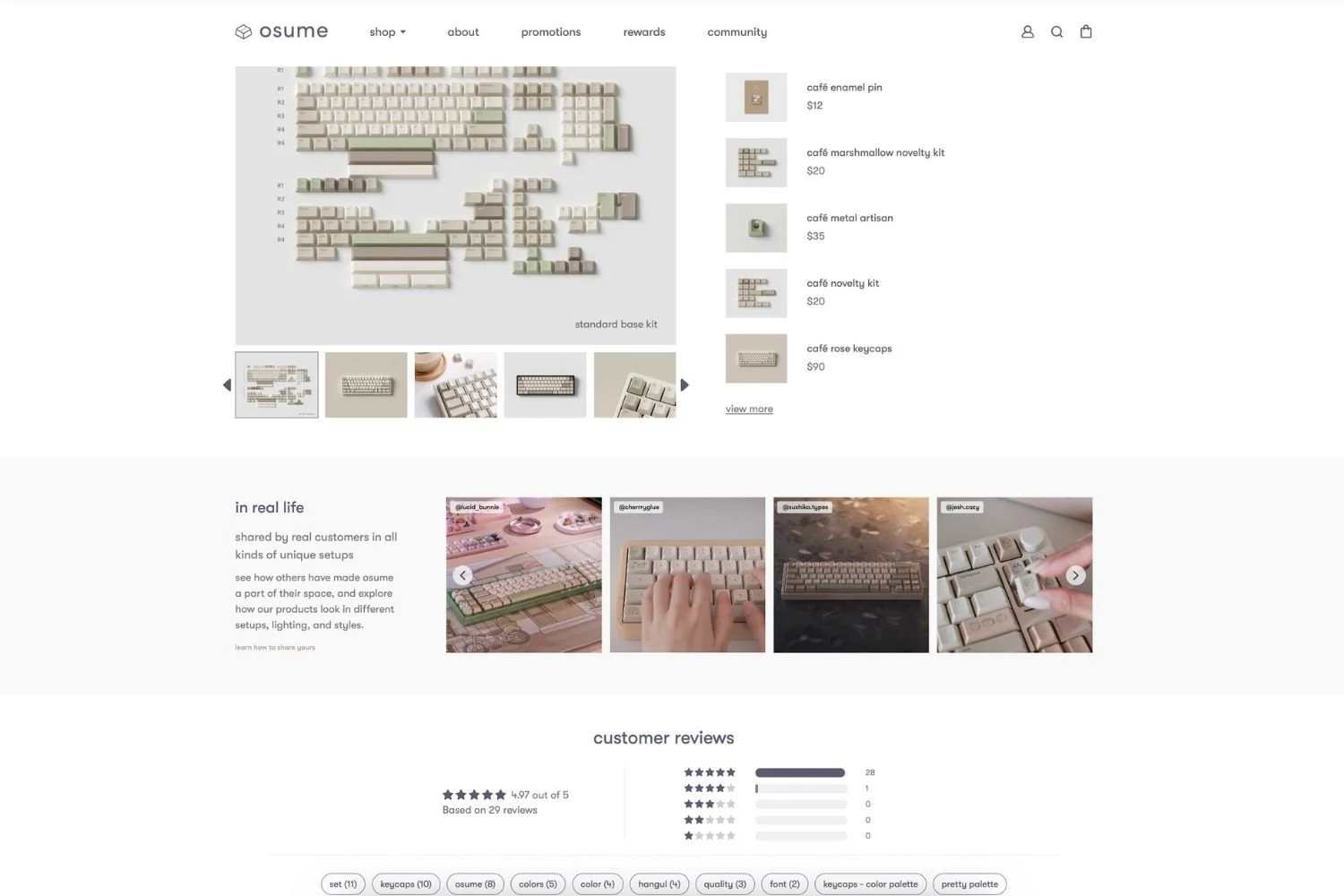
Osume product page featuring a UGC Instagram feed powered by Mintt Instafeed.
Social Proof at the Point of Purchase
Social proof and social commerce are closely linked. Social proof is the mechanism that makes social commerce work — seeing others engage with, buy, and enjoy a product is what creates the confidence to buy it yourself.
The mistake many brands make is treating social proof as something that lives in the reviews section, separate from the main shopping experience. In a social commerce strategy, social proof should be woven into the buying journey — visible on product pages, present on the homepage, embedded at exactly the moment a shopper is deciding.
A shoppable Instagram feed does this naturally. When someone is looking at your leather boots and they can see six real customers wearing them in different settings, different outfits, different cities, that's not just reassuring — it's inspiring. It turns a purchase decision into a moment of aspiration.
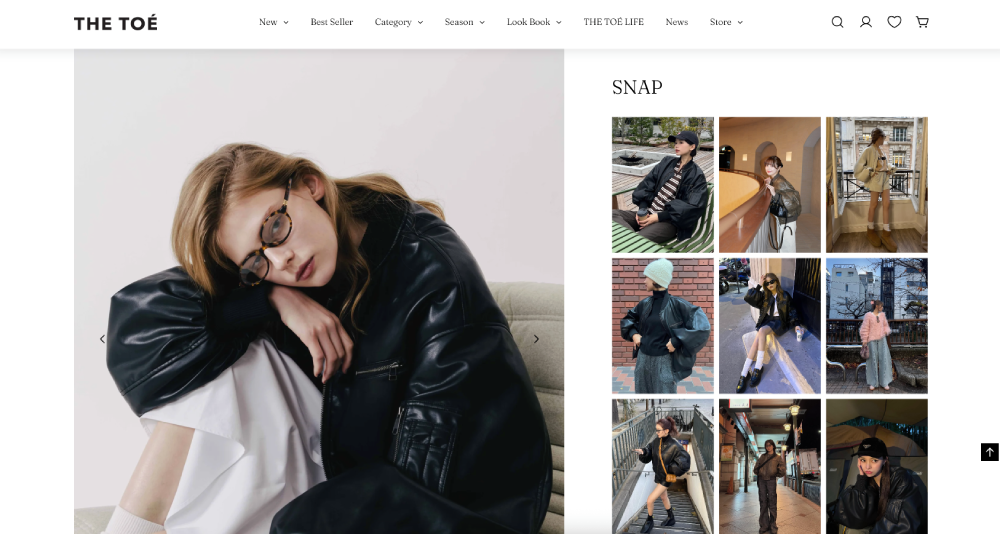
Clothing brand The Toé uses Mintt Studio to show relevant photos from their Instagram on product pages.
Making It Work on Your Shopify Store
The practical side of this doesn't need to be complicated. A few principles that separate a shoppable feed that converts from one that just fills space:
- Product pages are your highest-leverage placement. Put your feed where purchase intent is already high. A feed showing the exact product someone is considering is far more powerful than a general lifestyle gallery on the homepage — the same idea as Instagram on product and collection pages for conversion.
- Curate for authenticity, not aesthetics. Real moments outperform heavily edited content. Prioritise posts that show the product in genuine use — the messier and more human, the better.
- Tag products on every post. Each product tag removes a decision step. If a post features multiple items, tag them all and let shop the look do the work of building a cart from a single scroll.
- Keep mobile tight. One or two rows on mobile loads faster, feels cleaner, and typically drives more engagement than an overwhelming grid.
- Let it update automatically. A feed that refreshes itself as new tagged posts come in means your storefront always reflects what's current — new launches, seasonal content, the latest customer posts — without any manual work.
Bring Your Instagram Into Your Store
Our app, Mintt Instafeed, is a Shopify Instagram feed app built specifically for brands who want to turn Instagram into a social commerce channel on their own storefront. Embed shoppable feeds, pull in tagged UGC, tag products directly on posts, and let the feed update automatically — no code, no developer required.
Social commerce is already happening around your products. Mintt Instafeed makes sure your store is part of it.
Try it for free on the Shopify App Store
Updated by Mintt Studio Team on April 22, 2026

We are a small team building big things as a Shopify Partner. Offering reliable solutions for merchants, our apps reach 900 million customers every month.