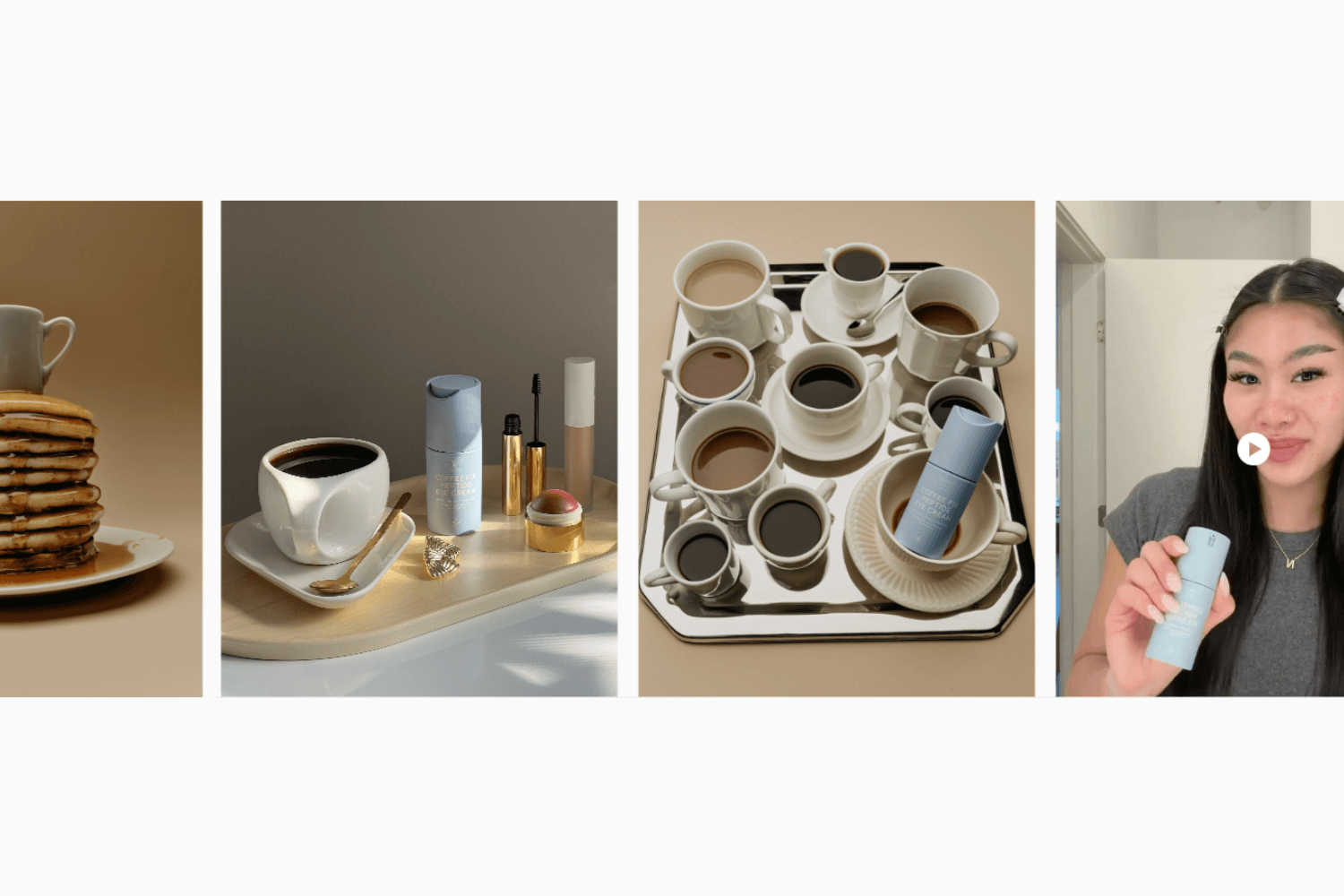
5 Types of Shopify Social Commerce Apps
Shopify social commerce apps fall into five main types: Instagram feed apps, TikTok feed apps, UGC galleries, shoppable social apps, and live shopping apps. Each one connects social content to your store, but each does a different job.
Shoppers already buy this way. In 2026, 45% of online shoppers said they buy through social media, according to DHL's 2026 E-Commerce Trends Report. eMarketer forecasts US retail social commerce sales to pass $100 billion in 2026.
This guide maps the full category. It explains what each type does, what to look for, and where each one fits in a store. It also covers adjacent tools and shows which types Mintt Studio's apps cover.
What Counts as a Social Commerce App on Shopify
A social commerce app connects social media content to a Shopify store so that content drives discovery, trust, or a sale. The connection runs in one of two directions.
Social-to-store apps bring posts, videos, and customer content from social platforms onto your storefront. Store-to-social apps push your product catalog out to social platforms so people can shop inside Instagram, Facebook, or TikTok.
This guide focuses on social-to-store apps, because they change what shoppers see on your own site. Live shopping is the one type that works in both directions, so it gets its own section. Store-to-social sales channels appear under adjacent categories.
Social Commerce Platforms vs Shopify Social Commerce Apps
Platforms and apps are two layers of the same system. Platforms are where social shopping happens. Apps are the Shopify tools that connect those platforms to your store.
Shopify groups social commerce platforms into five kinds:
- Social networks that sell through profiles and posts, such as Instagram
- Visual discovery platforms that link images to product pages, such as Pinterest
- Video platforms that add shopping to short videos and livestreams, such as TikTok
- Messaging platforms that recommend products and take orders in chat, such as WhatsApp
- Community marketplaces built around seller profiles, such as Depop
Shopify apps sit between these platforms and your storefront. Most social-to-store apps draw from two of the five kinds: social networks and video platforms. Visual discovery, messaging, and marketplace platforms mostly connect through store-to-social sales channels instead.
The Five Types of Shopify Social Commerce Apps at a Glance
The table below maps each app type to the platform it draws from, the job it does, and the Mintt app that covers it.
| App type | Draws from | What it does | Main job | Typical placement |
|---|---|---|---|---|
| Instagram feed apps | Social networks | Auto-syncs Instagram posts, Reels, and videos to the store | Brand presence and fresh content | Homepage, landing pages |
| TikTok feed apps | Video platforms | Displays TikTok videos as galleries, strips, or carousels | Short-form video on-site | Homepage, product pages, landing pages |
| UGC galleries | Social networks | Shows content from customers and creators | Social proof and trust | Product pages, community pages |
| Shoppable social apps | Social networks and video platforms | Tags products to social posts and videos | Conversion | Product, collection, and homepage |
| Live shopping apps | Video platforms | Sells products during real-time video streams | Demonstration and urgency | Social platforms, dedicated live pages |
The types overlap. One app can cover several of them, and "shoppable" is often a capability added to feeds and galleries rather than a separate install.
1. Instagram Feed Apps
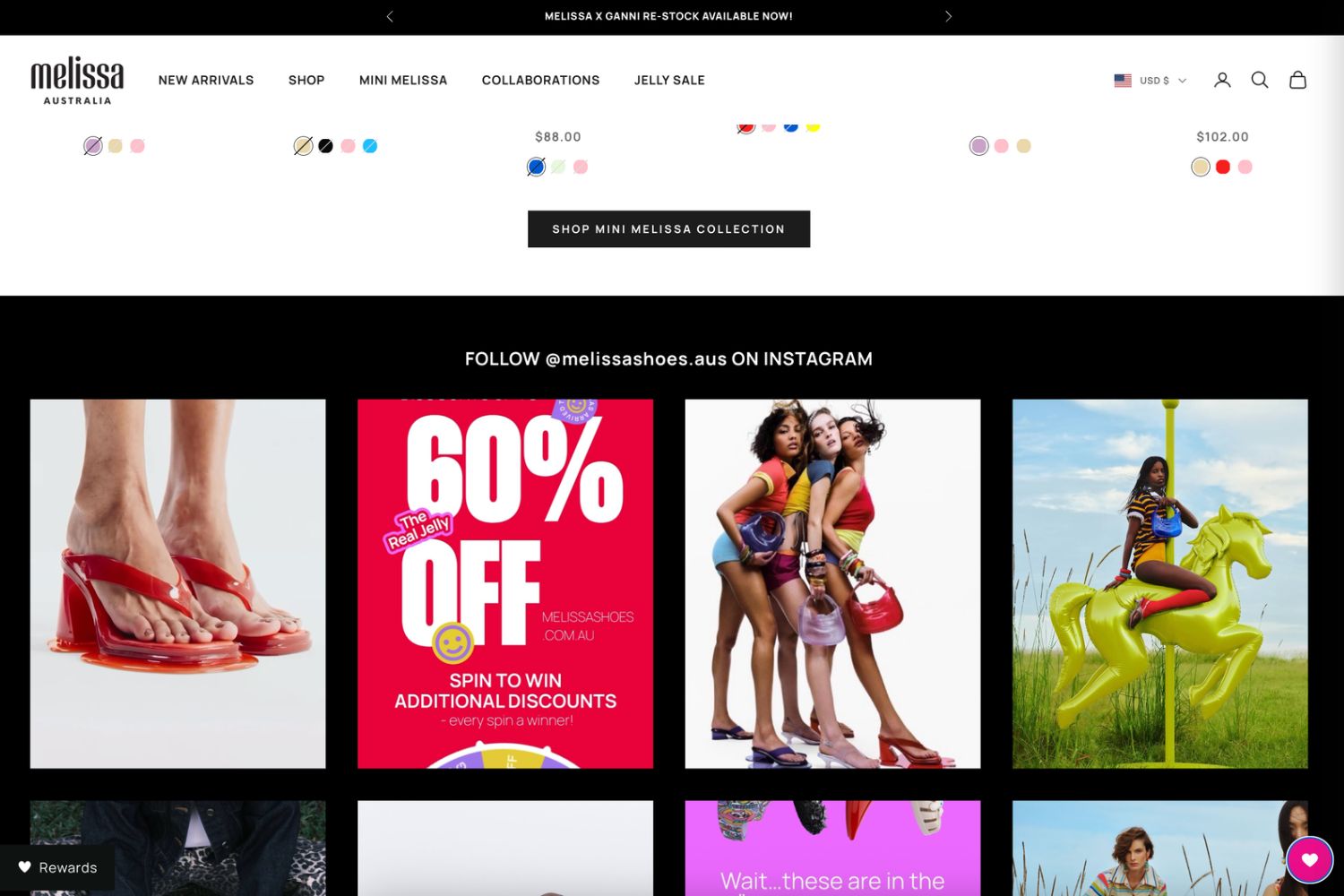
An Instagram feed app connects your Instagram account to your store and displays your posts as an embedded block. The feed updates automatically when you publish, so the storefront stays current without manual uploads.
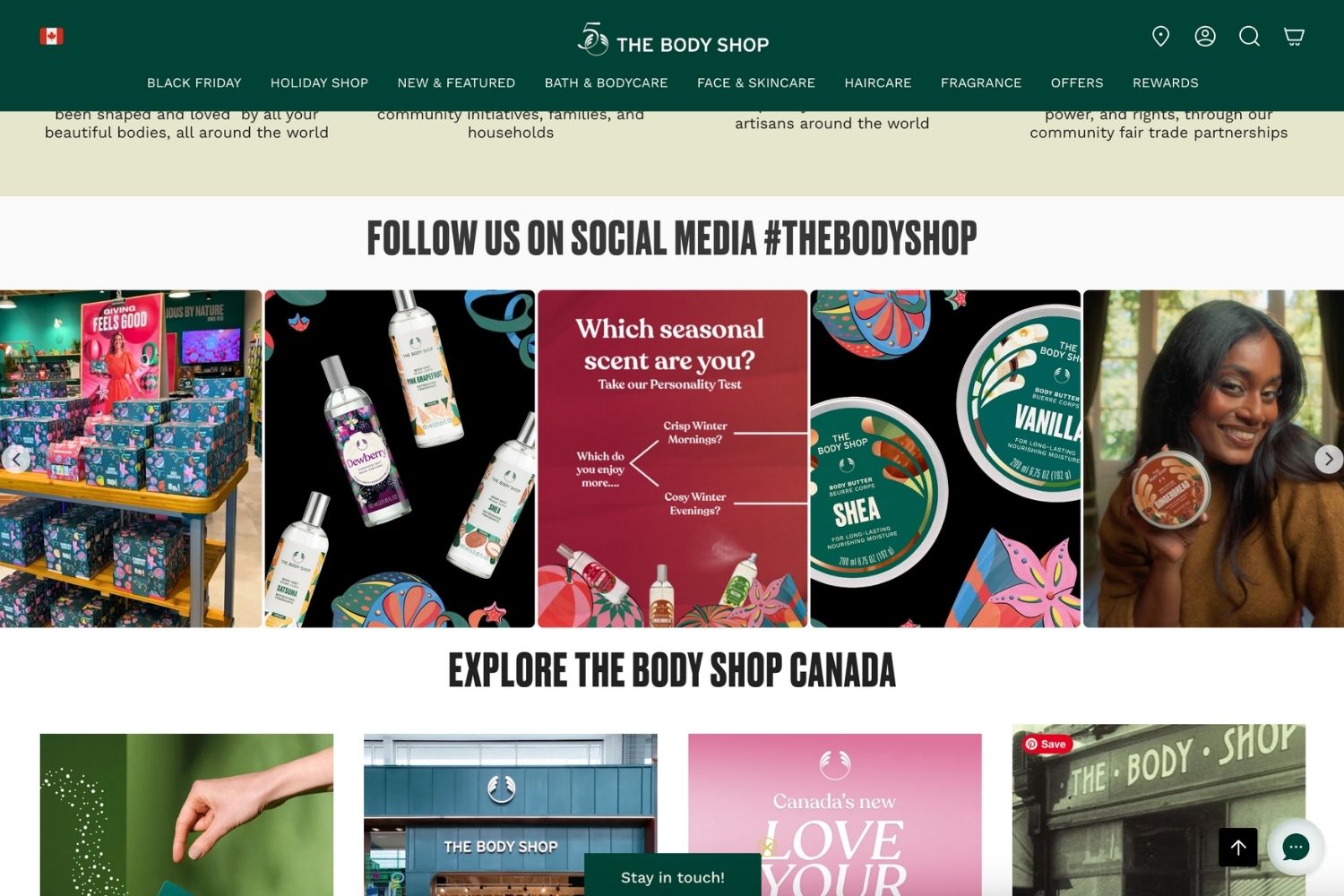
Instagram feed apps are often the first social commerce tool a Shopify brand installs. Most visual product content already lives on Instagram, so the feed reuses work the brand has already done.
What to Look For
- Auto-sync that keeps working through Instagram API changes
- Layout options (grid, slider, Reels-style) that match your theme
- Curation controls to hide, pin, reorder, or filter posts by hashtag
- An official, Meta-approved account connection
Mintt Instafeed brings your Instagram to your storefront
Mintt Instafeed has run on Shopify since 2016 and is used by more than 300,000 stores. It holds a 4.9-star rating on the Shopify App Store.
The app auto-syncs Instagram posts, Reels, and videos into grid, slider, and Reels-style layouts. Merchants can hide, pin, reorder, and filter posts by hashtag. It is an official Meta-approved app, and it adds no watermarks, including on the free plan.
2. TikTok Feed Apps
A TikTok feed app displays your TikTok videos on your Shopify store as a gallery, strip, or carousel. It brings short-form video onto your pages without re-uploading files.
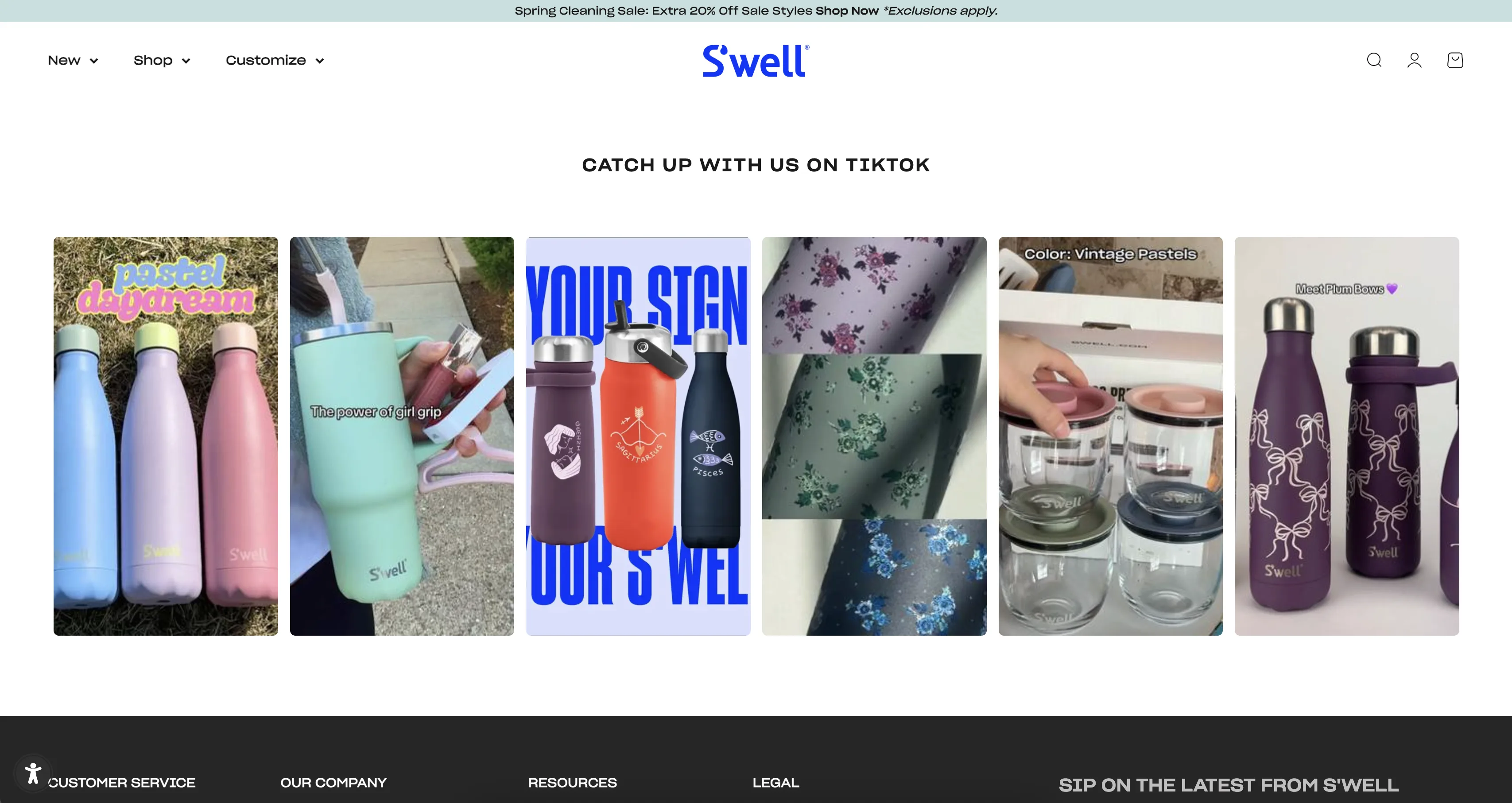
TikTok content is vertical and video-first. That makes layout format, autoplay, and mobile display more important than they are for a photo grid.
Video also moves buyers. In Wyzowl's 2026 State of Video Marketing survey, 85% of people said a video convinced them to buy a product or service.
What to Look For
- Vertical (9:16) and square (1:1) layout options
- Autoplay inside the feed
- Hashtag filtering to show only product-relevant videos
- Product tagging, if you want videos to sell as well as entertain
- Layouts optimized for mobile
Mintt TikTok Feed brings your TikTok to the storefront
Mintt TikTok Feed launched on the Shopify App Store in January 2023. It holds a 4.9-star rating and carries the Built for Shopify badge.
The app syncs TikTok videos automatically and displays them as strips, grids, and carousels on home, product, collection, or other pages. The free plan includes strip and grid layouts and a link to your TikTok account.
The Mintt Plus plan adds product tagging, product prices and reviews on videos, and autoplay. It also adds likes, hashtag curation, and unlimited feeds.
See how Mintt TikTok Feed works
3. UGC Galleries
A UGC gallery displays content created by customers and creators rather than by the brand. It usually sits on product pages, where shoppers are deciding whether to buy.
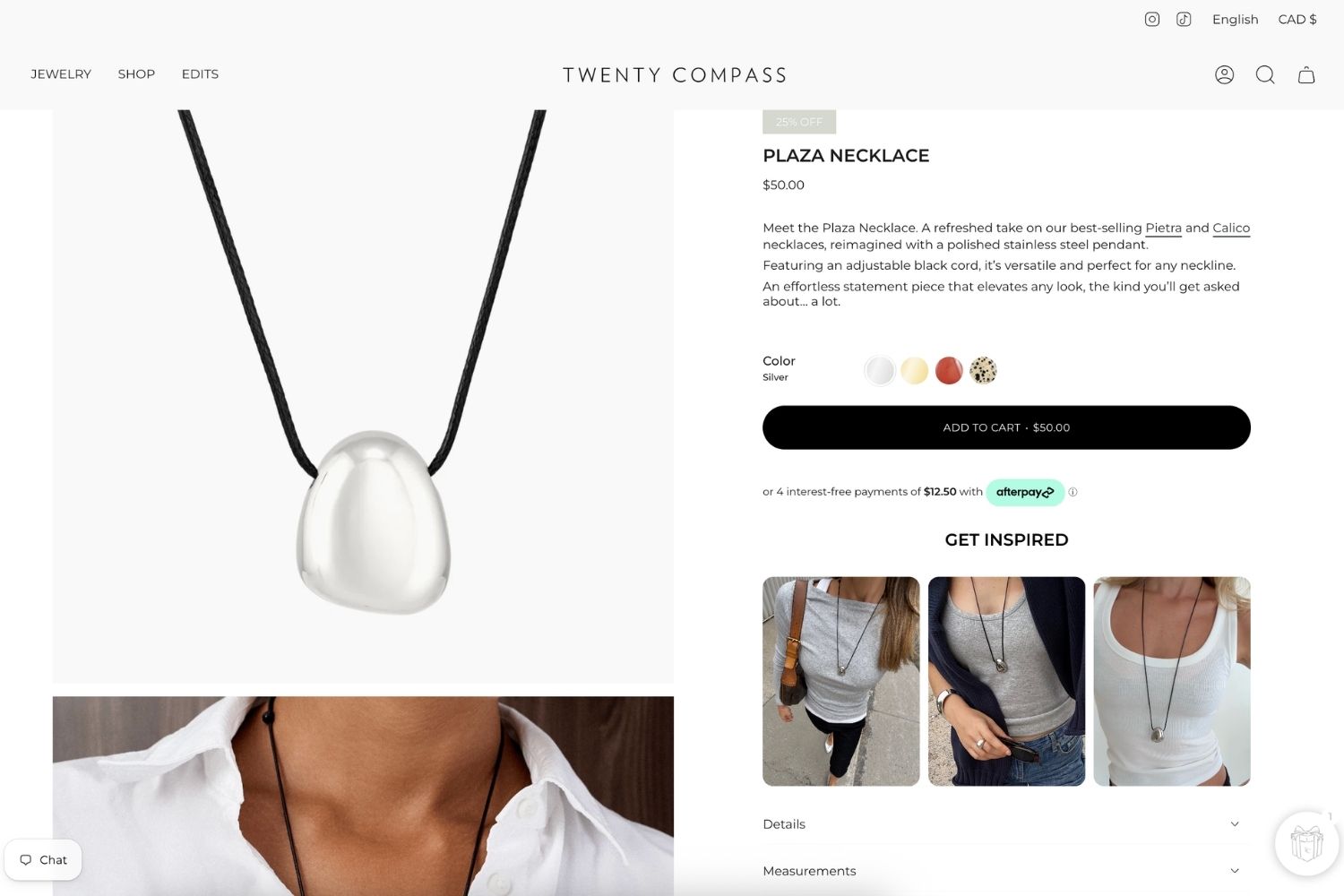
UGC works as social proof because it comes from people outside the company. A customer photo answers a question brand photography cannot: how the product looks in real life.
UGC galleries draw content from four main sources:
- Instagram posts where customers or creators tag the brand
- Hashtag campaigns
- Files the brand collects and uploads, such as creator deliverables
- Photo and video reviews from review apps
What to Look For
- Tagged-post import, so customer content flows in without manual collection
- Custom media uploads for content that never lived on Instagram
- Moderation controls to approve, hide, and reorder posts
- Product-level placement, so each product page shows UGC for that product
- No view caps on UGC video
Mintt Instafeed brings UGC to your storefront
Mintt Instafeed pulls in Instagram posts where customers and creators tag your brand. It also lets you build feeds from your own uploaded files. UGC video plays without view limits or throttling.
Merchants place UGC galleries on product pages, the homepage, or a dedicated community page. Osume, a Shopify keycap brand, uses Mintt Instafeed on all three. Its product pages show customer setups featuring that exact product.
See UGC galleries built with Mintt Instafeed
4. Shoppable Social Apps
A shoppable social app turns a social post or video into a path to purchase. A shopper clicks a tagged post, sees the product, and moves to the product page or adds it to cart.
Shoppable functionality usually sits on top of the other three types. An Instagram feed, TikTok feed, or UGC gallery becomes shoppable once you tag products to the content.
The category also includes shoppable video placed outside your storefront. Mintt Instafeed, for example, lets merchants upload shoppable videos to Shopify's Shop app to reach new shoppers.
What to Look For
- Product and collection tagging on individual posts
- Add-to-cart directly from the feed
- Product details such as price and reviews shown on the content
- Feeds curated automatically by product or collection page
- Performance analytics on feed engagement
Mintt Instafeed and Mintt TikTok Feed help you build shoppable experiences
Both Mintt apps support shoppable content. Mintt Instafeed tags products and collections to Instagram posts, Reels, and UGC, and lets shoppers add to cart from the feed.
Mintt TikTok Feed tags products in TikTok videos so shoppers can buy while watching, on the Mintt Plus plan. For instance, CAT uses Mintt Instafeed to run a shoppable Instagram feed across its storefront.
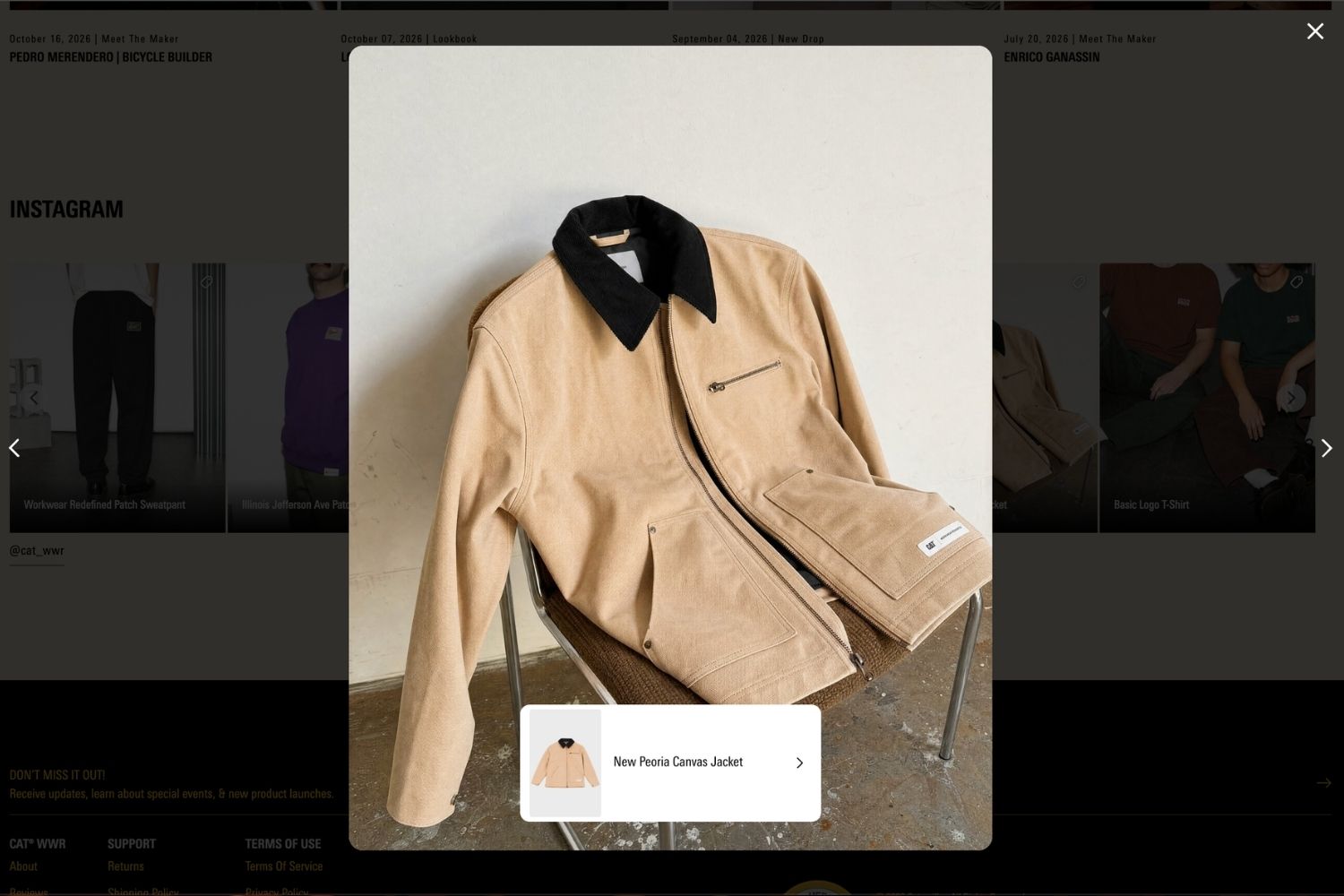
See shoppable videos in action
5. Live Shopping Apps
A live shopping app lets a brand sell during a real-time video stream. A host demonstrates products, and viewers buy while the stream is running.
Live shopping works best for products that need demonstration, such as cosmetics and gadgets. The real-time format also adds urgency through limited drops and stream-only offers.
Where Live Shopping Happens
Most live shopping runs natively on social platforms rather than on the storefront:
- TikTok Shop LIVE: sellers tag products during broadcasts for in-app purchase
- YouTube shoppable livestreams: creators tag and pin products in a Shopping panel, in eligible countries
- Instagram Live: brands demo products and send viewers to their shop or tagged content
Dedicated live selling apps for Shopify add tools these platforms lack. Common examples include comment-to-buy mechanics, where viewers order by typing in the chat.
What to Look For
- Sync with your Shopify catalog and inventory
- Checkout during the stream, or a short path to your store
- Support for the platforms where your audience watches
- Stream replays that stay shoppable after the broadcast ends
- Reporting that ties stream activity to revenue
Adjacent Categories: What Sits Next to Social Commerce
Several app types overlap with social commerce but do a different job. Most stores combine one or two of them with a feed or UGC app.
Social sales channels. These store-to-social apps sync your catalog to Instagram, Facebook, or TikTok so people can buy inside those platforms. They work on the platform side, not on your storefront.
Multi-platform aggregators. These widgets combine content from several social networks into one block. They suit brands that want one widget for every network.
Photo and video review apps. These collect reviews with customer media attached. Mintt Instafeed integrates with Judge.me and CWILL Reviews, so review content and social content can work together.
Influencer and affiliate apps. These recruit, track, and pay creators. The content those creators produce often ends up in a UGC gallery.
Page builders. These control how and where a feed appears. Mintt Instafeed integrates with GemPages, EComposer, and Foxify.
How to Choose the Right Type for Your Store
Start with the job you need the content to do:
- Keep the store fresh with minimal effort: an Instagram feed app
- Reuse short-form video you already publish: a TikTok feed app
- Reduce purchase hesitation on product pages: a UGC gallery
- Turn content views into add-to-cart: shoppable tagging on any of the above
- Sell products that need a live demo: a live shopping app, paired with a feed for the clips
Most stores start with one type and add another as their content program grows. A brand active on both Instagram and TikTok often runs both feeds, each on the pages where that format fits best.
How Mintt Studio Solutions Fit for Each Social Commerce Apps
Mintt Studio covers four of the five social commerce types with two apps. Mintt Instafeed handles Instagram feeds, UGC galleries, and shoppable Instagram content. Mintt TikTok Feed handles TikTok feeds and shoppable TikTok video.
| App type | Mintt app | What it covers |
|---|---|---|
| Instagram feed apps | Mintt Instafeed | Auto-synced posts, Reels, and videos in grid, slider, and Reels-style layouts |
| TikTok feed apps | Mintt TikTok Feed | Auto-synced TikTok videos in strip, grid, and carousel layouts |
| UGC galleries | Mintt Instafeed | Tagged customer and creator posts, custom uploads, no view limits on UGC video |
| Shoppable social apps | Mintt Instafeed and Mintt TikTok Feed | Product and collection tagging, add-to-cart from the feed, prices and reviews on TikTok videos |
| Shoppable video beyond the store | Mintt Instafeed | Shoppable videos uploaded to the Shop app |
| Live shopping apps | Not covered | Stream clips posted as Reels or TikToks sync into either feed with product tags |
Moreover, Mintt Instafeed integrates with review apps and page builders, so it fits into an existing stack.
Add Mintt Instafeed to your store to make your Instagram shoppable, or install Mintt TikTok Feed to bring your TikTok videos on-site.
Frequently Asked Questions
What is a social commerce app on Shopify?
It is an app that connects social media content to a Shopify store. Most bring Instagram or TikTok posts, videos, and customer content onto the storefront to drive trust and sales.
What are the main types of Shopify social commerce apps?
The five main types are Instagram feed apps, TikTok feed apps, UGC galleries, shoppable social apps, and live shopping apps. Adjacent categories include social sales channels, multi-platform aggregators, review apps, and influencer tools.
What is the difference between an Instagram feed app and a UGC gallery?
An Instagram feed app shows content the brand publishes. A UGC gallery shows content customers and creators publish about the brand. Mintt Instafeed handles both.
Is a shoppable feed a separate type of app?
Usually not. Shoppable tagging is a feature added to an Instagram feed, TikTok feed, or UGC gallery. Both Mintt Instafeed and Mintt TikTok Feed support product tagging.
Do I need separate apps for Instagram and TikTok?
With Mintt, yes: Mintt Instafeed covers Instagram and Mintt TikTok Feed covers TikTok. Each is built around its own platform's content format.
What is the difference between a social commerce platform and a social commerce app?
A platform, such as Instagram or TikTok, is where social shopping happens. A Shopify app connects that platform to your store, for example by displaying your TikTok videos on product pages.
Which Mintt app should I use for UGC?
Mintt Instafeed. It imports Instagram posts where customers tag your brand, accepts custom media uploads, and plays UGC video without view limits.
Updated by Mintt Studio Team on November 26, 2026

We are a small team building big things as a Shopify Partner. Offering reliable solutions for merchants, our apps reach 900 million customers every month.