UGC Best Practices for Shopify Brands

Most Shopify shoppers trust other customers more than they trust your ads. Nearly 8 in 10 people say UGC highly impacts their purchasing decisions, 8.7 times more than influencer content, according to Stackla's consumer research. User-generated content, or UGC, is how Shopify brands turn that influence into sales.
This guide covers what UGC content is, the benefits of UGC for Shopify brands, and how to create user-generated content at scale. It also shows how to use UGC features as ads in your store, and on product pages.
What Is UGC Content?
UGC content is any photo, video, or post created by a real customer, not a brand or paid agency. A shopper posts a photo wearing a jacket they bought. A customer films a video unboxing a skincare set. Both count as UGC.
UGC differs from influencer content. Influencers are usually compensated to create content on a brand's behalf. UGC starts as an unpaid, organic post from someone who already bought the product.
Benefits of UGC for Shopify Brands
The benefits of UGC for Shopify brands come down to three things: trust, cost, and content volume.
Trust. Customers believe other customers over brand messaging. Real photos and videos from real buyers work as social proof that ad copy cannot replicate. Learn more about boosting social proof on your Shopify store.
Cost. UGC costs less to produce than studio photography or paid influencer campaigns, since customers create it for free or other incentives.
Volume. A single product can generate dozens of UGC posts a month once a brand asks for them consistently. That gives a store a steady supply of fresh content for Instagram UGC.
Types of UGC: Photo, Video, and Ads
UGC comes in three working formats for Shopify brands: ugc photo, ugc video, and ugc ads.
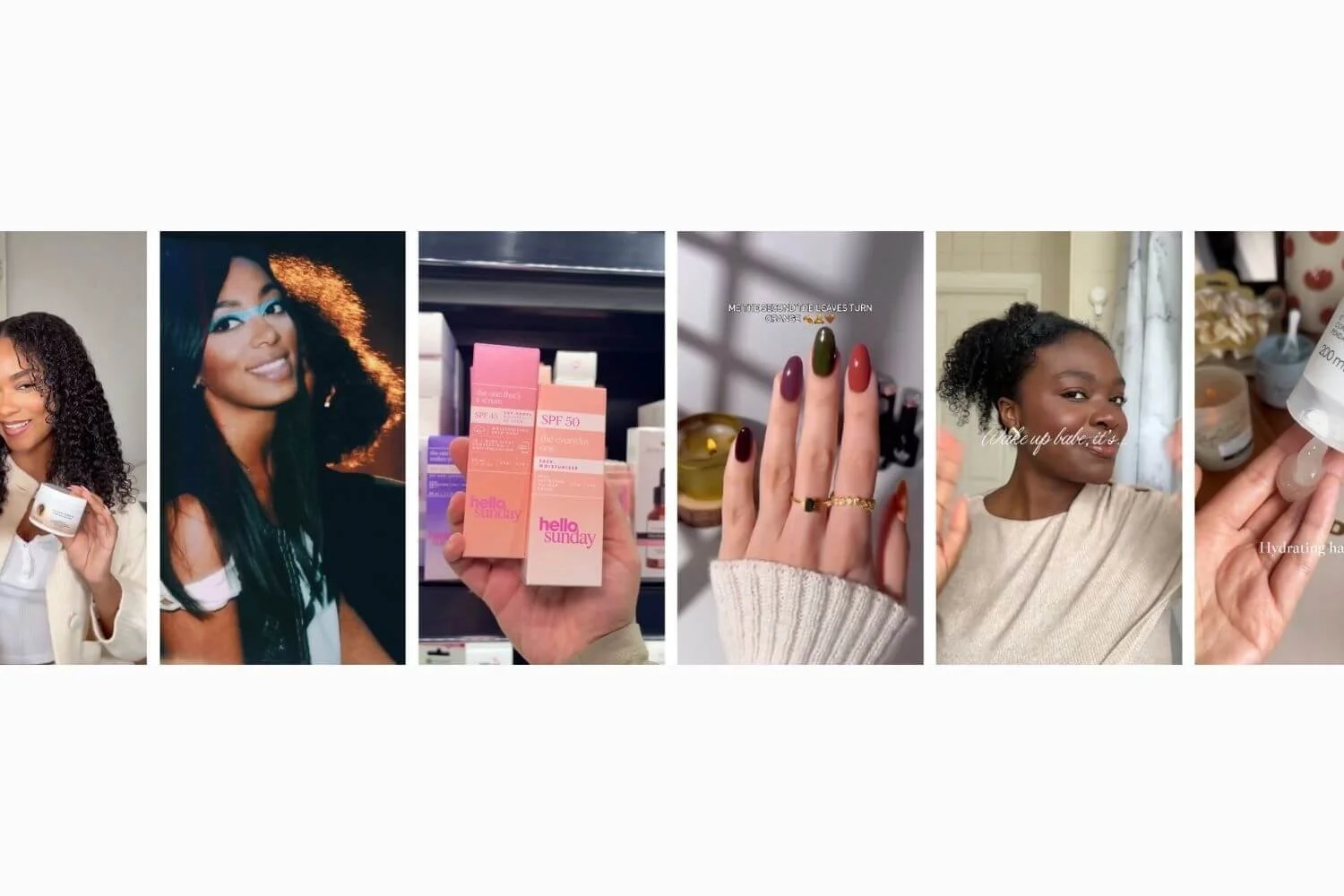
UGC photo content includes product-in-use shots, unboxing photos, and tagged posts from Instagram and TikTok. It works well on product pages and in feed widgets.
User generated video covers unboxings, try-on clips, and short reviews filmed by customers. Video converts higher than static images because it shows the product in motion. Brands can also pull in TikTok content alongside Instagram UGC for a wider video library. See real examples in shoppable video case studies and learn how shoppable videos drive Shopify sales.
UGC ads repurpose photo or video content from real customers into paid social campaigns. These ads often outperform brand-produced creative because they look native to the platform feed.
How to Create User-Generated Content
Creating user-generated content starts with asking, not waiting.
- Ask at the right moment. Send a post-purchase email or SMS a few days after delivery, when the customer has used the product and has something to say.
- Run a branded hashtag campaign. Give customers a specific hashtag to use, then monitor and collect tagged posts.
- Offer an incentive. A discount code, giveaway entry, or feature on the brand's page gives customers a reason to post.
- Add an on-site upload option. Let customers submit photos and videos directly, so they do not need to already be active on social media.
UGC Influencer Marketing
UGC influencer marketing blends the two formats. A brand briefs a creator to produce content that looks like unpaid customer content, then runs it as an ad or features it on-site with the creator's permission.
This approach works because the content keeps the authentic feel of UGC while giving the brand control over messaging and usage rights. Always confirm usage rights in writing before reposting a creator's content, and disclose paid partnerships per FTC guidelines on influencer disclosures.
How to Use UGC in Multiple Ways for your Shopify store
UGC Ads
UGC photos and videos make strong ad creatives because they do not look like ads. Pull top-performing organic UGC and run it as paid social or retargeting creative. Brands that turn Instagram UGC into Shopify conversions often see lower cost per click than with studio-produced ads.
Shopify storefront
Tools like our app Mintt Instafeed help Shopify brands collect, moderate, and display UGC directly on their storefront and product pages without code. It turns Instagram and customer content into shoppable feeds that can be displayed across key pages. Common placements include:
Homepage
A shoppable Instagram feed turns UGC into a storefront merchandising tool. Review shoppable Instagram feed best practices for layout and placement guidance, and see how social commerce drives Shopify sales through on-site UGC feeds.
Product pages
Product pages convert best when shoppers can see the product used by people like them. Add a UGC feed filtered to that specific product, using product feeds for product pages. Pair this with other CRO tips for high-converting product pages.
Best Practices for Running a UGC Program
Avoid the common Instagram feed mistakes other Shopify stores make by following these five practices.
- Moderate before publishing. Review every submission for image quality, brand fit, and appropriateness before it goes live.
- Get rights confirmed, not assumed. A tagged post does not automatically grant usage rights. Ask permission before using UGC in ads or marketing emails.
- Disclose paid relationships. Follow FTC disclosure rules anytime a post involves compensation or a free product.
- Refresh content on a schedule. Rotate UGC monthly so the same five photos do not run for a year.
- Match the brand's existing design. Curate UGC that fits the store's visual identity, the same way creative UGC layouts frame their feeds.
Examples: UGC Done Well on Shopify
Osume, a Shopify brand selling keycaps, runs UGC across three placements on its store using the Mintt Instafeed app. See the full case study.
On the homepage, Osume places its latest Instagram feed just above the footer. By that point, visitors have already browsed products and collections, so the feed works as a final layer of social proof before they leave or convert.
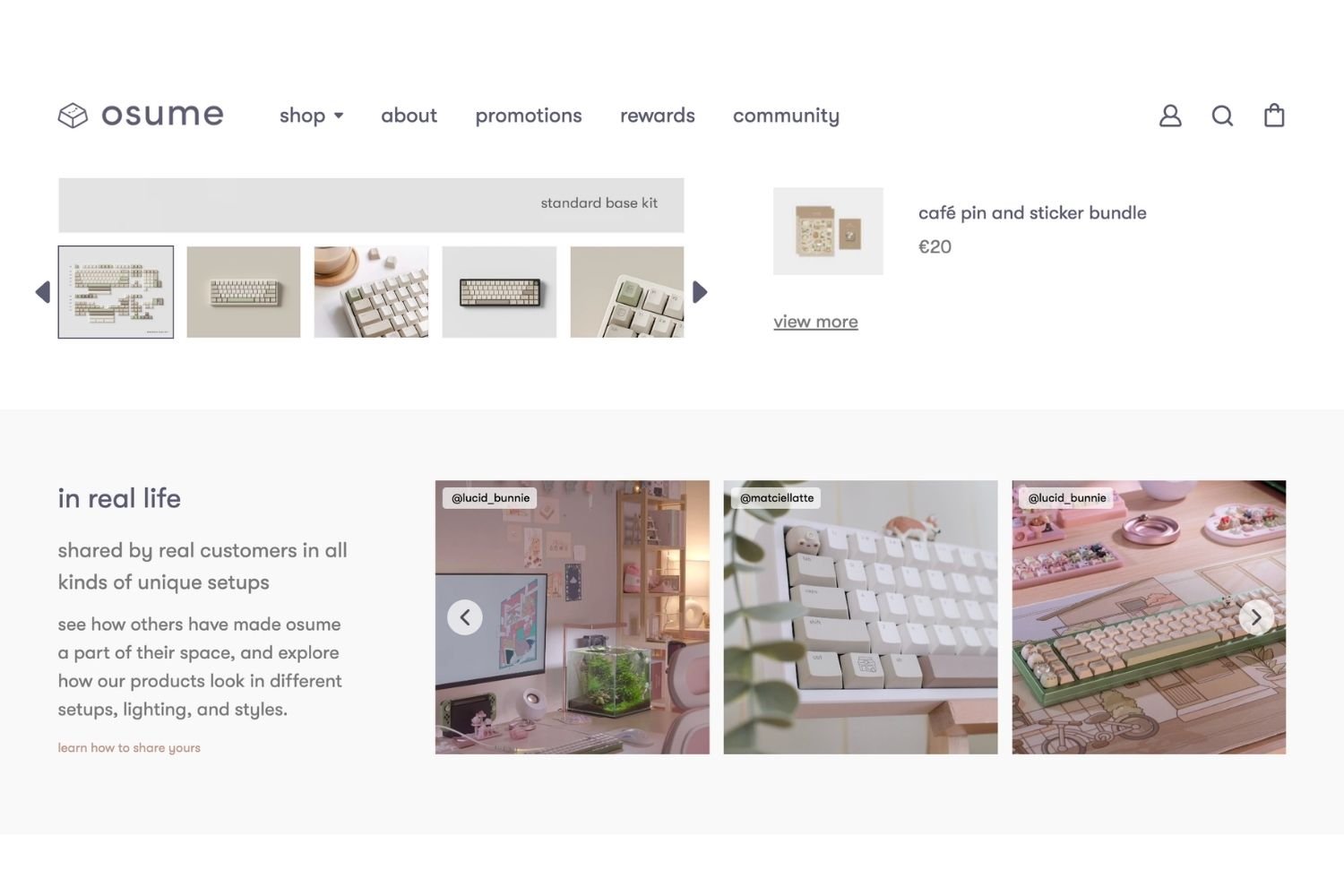
A UGC feed with photos shared by real customers on Osume's Cafe Keycaps product page.
On product pages, Osume shows tagged customer posts tied to specific products. The Cafe Keycaps product page displays real customer setups, so buyers see the product in use before they purchase.
Osume also runs a dedicated community page, where shoppable customer posts let visitors shop directly from UGC content. That gives the brand a destination page built entirely around UGC, not just a homepage widget.
FAQ
What counts as UGC content?
UGC content is any photo, video, review, or post that a real customer creates, not a brand or paid creator. Tagged Instagram posts, TikTok videos, and on-site photo uploads all count.
What are the benefits of UGC for Shopify brands?
The main benefits of UGC for Shopify brands are higher trust than branded content and lower production cost. It also gives a brand a steady supply of fresh content for ads, store feeds, and product pages.
How do I create user-generated content if customers are not posting?
Ask directly. Send a post-purchase request, run a branded hashtag campaign, or offer an incentive. An on-site upload tool also lets customers submit content without needing to post on social media first.
Is UGC influencer marketing the same as regular influencer marketing?
No. UGC influencer marketing briefs a creator to produce content that looks like organic customer content, while regular influencer marketing usually features the influencer's own voice and personal brand.
Can I use customer photos in ads without permission?
No. Always get explicit permission before using a customer's photo or video in paid ads, even if they tagged the brand publicly.
Get Started with Mintt Instafeed
UGC turns customers into a brand's most credible marketing channel, across ads, the storefront, and product pages. Add Mintt Instafeed to your store to start displaying shoppable UGC feeds without writing code.
Add Mintt Instafeed to your store
Updated by Mintt Studio Team on June 23, 2026

We are a small team building big things as a Shopify Partner. Offering reliable solutions for merchants, our apps reach 900 million customers every month.